 Skip to content
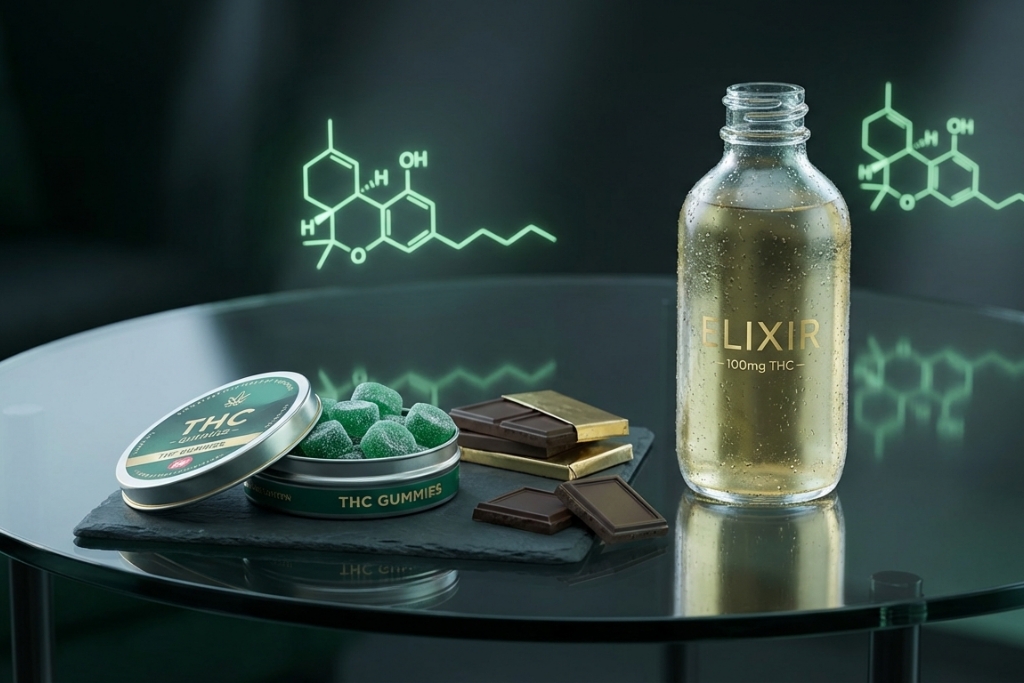
The way people consume cannabis has changed considerably over the past decade. Across legal U.S. markets and beyond, consumers now reach for more sophisticated options. Many prefer precisely dosed products — and in many cases, more powerful ones. High concentration edibles rank among the most talked-about categories in this space. Both recreational users and medical patients seek stronger, longer-lasting effects in a smoke-free format. Over recent decades, the perceived risk around cannabis use has decreased. Meanwhile, THC levels — the psychoactive compound in cannabis — have risen sharply. Routes of use have also evolved significantly. Understanding this category today matters more than ever as the market matures.
How Big Is the Cannabis Edibles Market Right Now?
Before zooming in on potency, it helps to understand the broader edibles segment. The numbers are striking. Analysts estimated the global cannabis edibles market at USD 12.3 billion in 2024. Projections show growth to USD 54 billion by 2034, at a CAGR of 15.9%. Market Research Future projects the industry to reach $55.34 billion by 2035. Evolving consumer preferences and regulatory advancements drive this 16.54% CAGR.
The U.S. remains the clear leader in this space. It holds 86% of the global edible cannabis market. Analysts estimated this segment at USD 10.6 billion in 2024. In 2025, U.S. adult-use cannabis purchases reached $23.9 billion. Medical cannabis sales hit $7.6 billion. According to BDSA, flower, vapes, edibles, and pre-rolls captured the biggest shares. Those figures came in at $11.8 billion, $7.7 billion, $4.3 billion, and $4 billion respectively.
Consequently, edibles are no longer a niche format. In Canada, edibles recently became the second most common cannabis consumption method after smoking. As a result, the entire supply chain has evolved rapidly to meet demand at every potency level.
What Exactly Are High Concentration Edibles?
To make sense of this category, it helps to clarify what sets a high concentration edible apart. In most legal markets, a standard serving falls in the 5–10 mg THC range. However, the market has expanded well beyond this baseline. Gummies, chocolates, baked goods, and beverages typically contain 5–10 mg of THC. Yet retailers also sell packages totaling 100 mg. Furthermore, the broader concentrate space has pushed potency into extreme ranges. Vapes carry a THC concentration of 50–95%. THC isolate — a pure crystal or powder — can reach 99% or higher.
As products have evolved, the science around defining “high potency” has grown more precise. A threshold above 30% THC may suit legal markets with wide potency ranges. Products can reach as high as ~99% THC. The biology of the cannabis plant and market data inform this threshold. Connecticut already requires a specific health warning for any concentrate exceeding 30% THC.
When marijuana first gained widespread attention, average THC levels hovered around just 1%. Now, vapes and joints routinely push 30% THC. Dispensary shelves stock concentrates boasting 90% to 95% THC in various forms.
Key Products Within the High Concentration Edibles Category
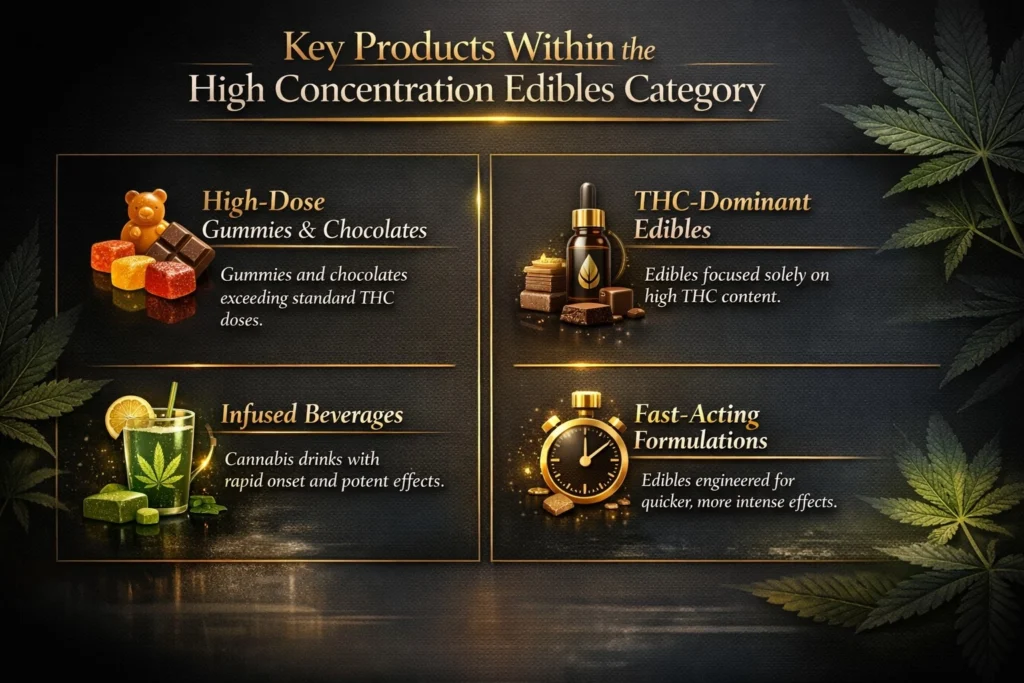
The category itself spans more ground than many assume. Here is a quick breakdown of the main product types in or near this potency range:
- High-dose gummies and chocolates: Gummies dominate the edibles segment. Chocolates emerge as the fastest-growing category among consumers. Both come at dosages exceeding standard serving sizes.
- Infused beverages: Cannabis beverages offer smoke-free consumption with faster onset than traditional edibles. Onset typically occurs within 10–20 minutes. The category grew 11% in 2024 due to consumer preference for sessionable, low-dose products.
- THC-dominant edibles: THC-only edibles hold the largest dollar share at 68%. That equals $1.95 billion in sales. Minor cannabinoids also show strong dollar growth.
- Fast-acting formulations: In Q1 2025, Cresco Labs introduced fast-acting cannabis gummies in Illinois. The company leverages proprietary technology to offer quicker onset of effects.
High Concentration Edibles Product Comparison
| Product Type | Typical THC per Serving | Onset Time | Duration | Key Trend |
|---|---|---|---|---|
| High-dose Gummies | 20–100+ mg | 30–120 minutes | 6–8 hours | Dominates segment due to portability |
| Infused Chocolates | 10–50 mg | 45–90 minutes | 5–7 hours | Fastest growing flavor category |
| THC Beverages | 5–30 mg | 10–45 minutes | 4–6 hours | 11% growth in 2024 |
| Specialty Concentrate Edibles | 30–100+ mg | 30–90 minutes | 6–10 hours | Rising demand for precise high potency |
Consumer Behavior and Dosage Preferences
Raw potency does not always match what consumers actually want. A real tension exists between the availability of high concentration edibles and user preferences. According to BDSA Consumer Insights, 42% of edible consumers in adult-use states prefer 10 mg or less per occasion. Dosages between 2.5 mg and 5 mg prove the most popular, at 17%.
Nevertheless, the demographic picture is shifting. Millennials and Gen Z account for more than 60% of cannabis purchases. Gen Z purchases grew 3% year-over-year, according to Headset Analytics. Additionally, 1 in 3 women now consume cannabis, especially edibles and infused products, according to Brightfield Group. These shifts matter because different demographics approach potency and risk tolerance differently.
Beyond demographics, overall usage trends point to a growing consumer base. The 2024 National Survey on Drug Use and Health (NSDUH) reports that 22.3% of people aged 12 and older used cannabis last year. That accounts for 64.2 million people. Furthermore, 42% of cannabis consumers use daily or near-daily. For the first time in recorded history, daily cannabis users outnumber daily alcohol drinkers.
Health and Safety Considerations Around High Concentration Edibles
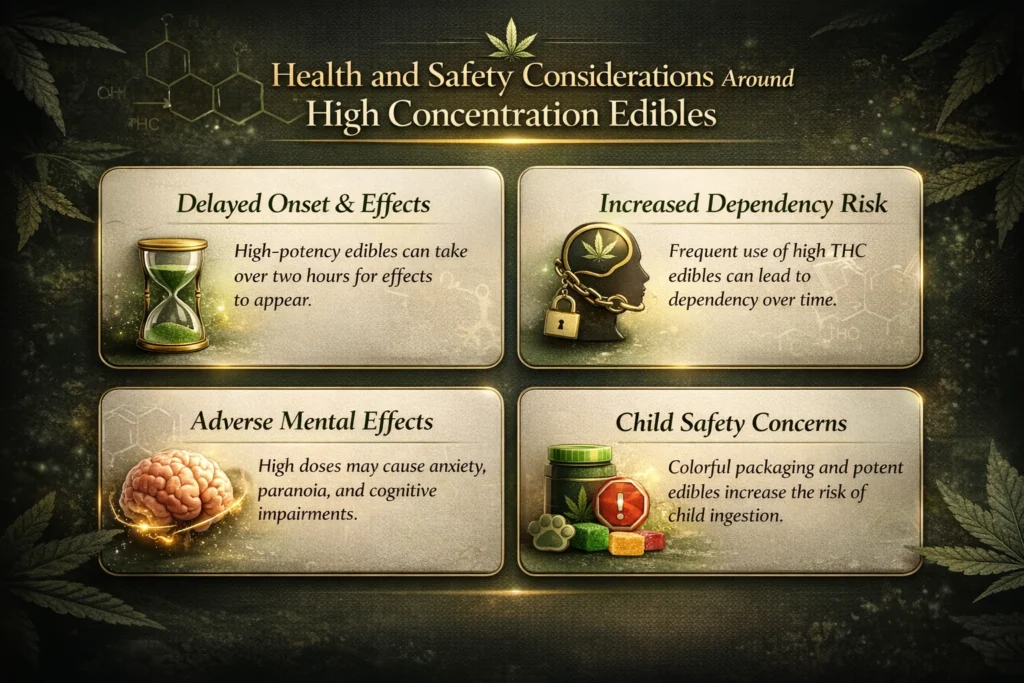
Discussing high concentration edibles without addressing safety would paint an incomplete picture. Edibles carry an increased overconsumption risk because effects take longer to appear. Onset often exceeds two hours. Individual factors like weight, metabolism, and sex influence timing. The type of edible and other foods eaten also play a role.
Moreover, risks grow as potency increases. High-potency THC products can cause dependency and cognitive impairments. Adverse effects include anxiety, paranoia, and psychosis. Vulnerable populations and heavy users face the greatest risk. Research in Science Direct confirms that health effects occur across the full range of potencies. Quantity, route of administration, and frequency of use also shape outcomes.
A growing concern involves young and vulnerable populations. Colorful packaging and high THC levels make products appealing yet dangerous to children. Accidental ingestion often leads to emergency room visits. Preventive measures like child-resistant packaging and public awareness campaigns help reduce these risks.
Regulatory Landscape for High Concentration Edibles
Regulation remains one of the most uneven and rapidly evolving parts of this story. Lawmakers across jurisdictions grapple with how to address more potent products. In 2025, many jurisdictions standardized edible dosage limits. Universal THC limits typically range from 5–10 mg per serving. Most cap packages at no more than 100 mg.
Beyond serving limits, regulators increasingly tighten labeling and testing requirements. Additional compliance measures now include:
- Stringent testing protocols: Labs must test for potency, contaminants, pesticides, and heavy metals to ensure consumer safety.
- Innovative compliance measures: Track-and-trace systems now include detailed production information for edibles.
- Some states emphasize consumer education and comprehensive labeling over strict caps alone.
- Washington State recommendations: Higher THC products exceeding 35% face marketing restrictions, mandatory health warning labels, and THC-based taxation.
The global picture is similarly complex. Germany’s 2024 regulatory change introduced a new national approach to cannabis policy. The German Cannabis Act accelerated discussion about non-profit models and public health safeguards across continental Europe.
Emerging Trends Shaping the High Concentration Edibles Segment
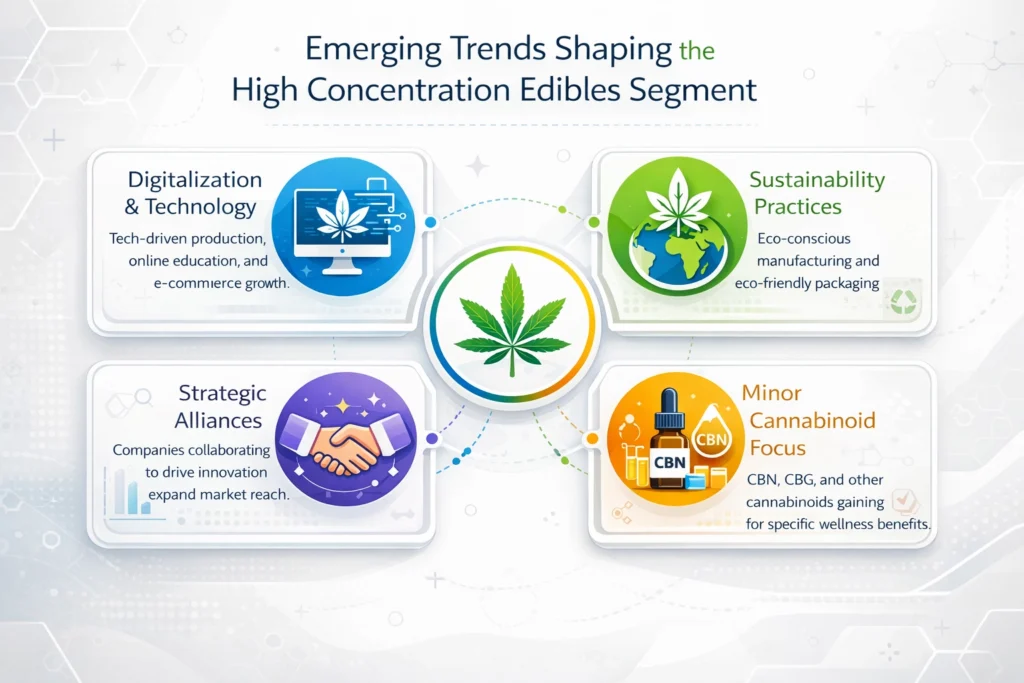
Though the regulatory and safety picture is nuanced, several innovation trends gain clear momentum. The Cannabis Edibles Market now emphasizes digitalization, sustainability, and technological integration. Strategic alliances increasingly shape the competitive landscape. Companies pool resources and expertise to accelerate growth.
Product innovation also accelerates at the brand level. In Q1 2025, edibles maker 1906 raised $25 million in a Series B funding round. Those funds support product development and market expansion. Internationally, Cronos Group received Q2 2025 regulatory approval to launch CBD-infused edibles in the United Kingdom.
Additionally, consumer interest in minor cannabinoids drives growth in minor cannabinoids like CBN and CBG. The future of high concentration edibles may extend beyond THC potency alone. Brands now engineer full-spectrum cannabinoid profiles into single products.
On the retail side, a notable shift moves market share from dried flower to edibles and beverages. In a marked change from prior years, THC percentage (60%) and price (58%) now dictate consumer choices.
What the Numbers Mean for the Road Ahead
Taken together, the data reveals a segment exploding in popularity while attracting serious regulatory attention. According to BDSA, U.S. regulated cannabis sales could reach $39.1 billion by 2029. The edibles category remains one of the most dynamic within that growth. State-level rules continue to diverge on THC limits per package.
Inconsistent limits can confuse consumers traveling between states. Markets with stricter caps may limit product availability. This dynamic potentially pushes consumers toward states with more lenient laws. That said, the risk of developing cannabis use disorder increases with use frequency and product potency. The proliferation of high-THC concentrates in today’s market heightens this concern.
High concentration edibles are not a passing trend. THC concentrations continue to rise in herbal cannabis products. Cannabis now comes in a wider variety of product types and consumption modes. These include smoking, vaping, eating, and drinking, according to the American Journal of Public Health. As the category grows, consumers and policymakers must stay closely informed. Understanding product contents, bodily effects, and responsible use remains essential.
Frequently Asked Questions
Q: What defines high concentration edibles?
A: High concentration edibles contain THC levels well above standard servings. They often exceed 20–30 mg per serving or 100 mg per package. They offer stronger, longer-lasting effects compared to typical 5–10 mg options.
Q: How do recent statistics describe the growth of high concentration edibles?
A: The edibles market expands rapidly, with projections reaching $54 billion globally by 2034. In the U.S., edibles hold a substantial share of the $23.9 billion adult-use market. Consumers increasingly explore higher potency options alongside traditional products.
Q: What safety factors should users consider with high concentration edibles?
A: Onset can take over two hours, increasing overconsumption risk. Higher potency raises chances of anxiety or dependency, especially for new users. Child-resistant packaging and clear labeling serve as critical preventive measures.
Q: How do states regulate high concentration edibles?
A: Most states limit servings to 5–10 mg THC and cap packages at 100 mg. Some require enhanced warnings for items over 30% THC concentration. States also mandate lab testing for potency and contaminants to protect consumers.
Stay Informed on High Concentration Edibles Trends
As the cannabis edibles market expands with new potency options and regulatory updates, understanding current products helps promote safer consumption practices. Get the latest cannabis products and high concentration edibles to enjoy responsibly and confidently.