
How to Use a Bong: Step-by-Step Setup, Inhalation, & Pro Tips
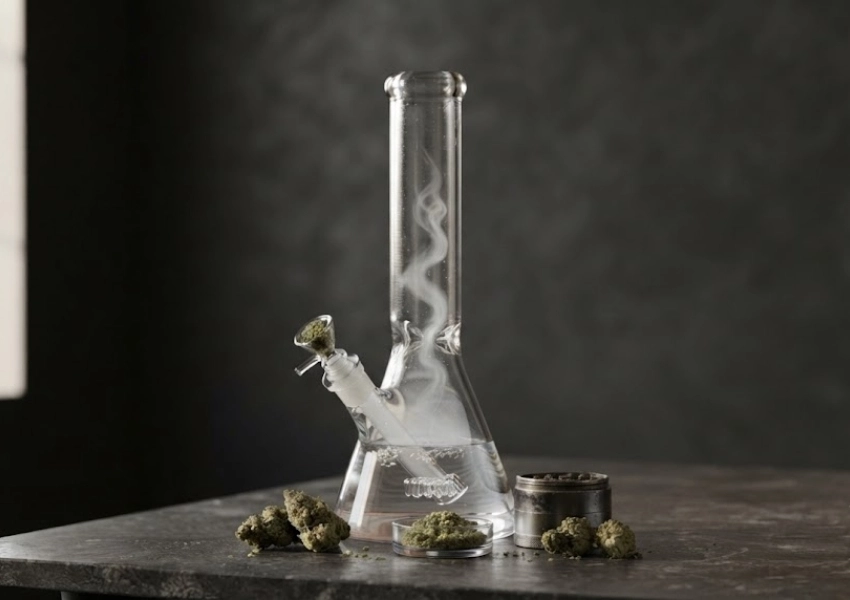
Learning how to use a bong starts with understanding how a water pipe effectively delivers cannabis flower through water filtration. Furthermore, it cools hot combustion smoke through water filtration. In addition, the liquid captures heavy particulate ash before inhalation. Many beginners feel intimidated by glass water pipes. However, the basic operating principles are straightforward. You create negative pressure by inhaling through the top mouthpiece. Consequently, this vacuum pulls fresh smoke into the water chamber. The bubbling water cools the hot gas rapidly. Therefore, you enjoy a much smoother hit.
This comprehensive tutorial explains the complete process from start to finish. First, you will discover basic glass anatomy. Next, we cover proper water calibration and bowl packing. Then, we outline smooth inhalation techniques. Finally, we examine proper glass sanitation habits.
The Anatomy and Fluid Mechanics of Bong Water Pipe
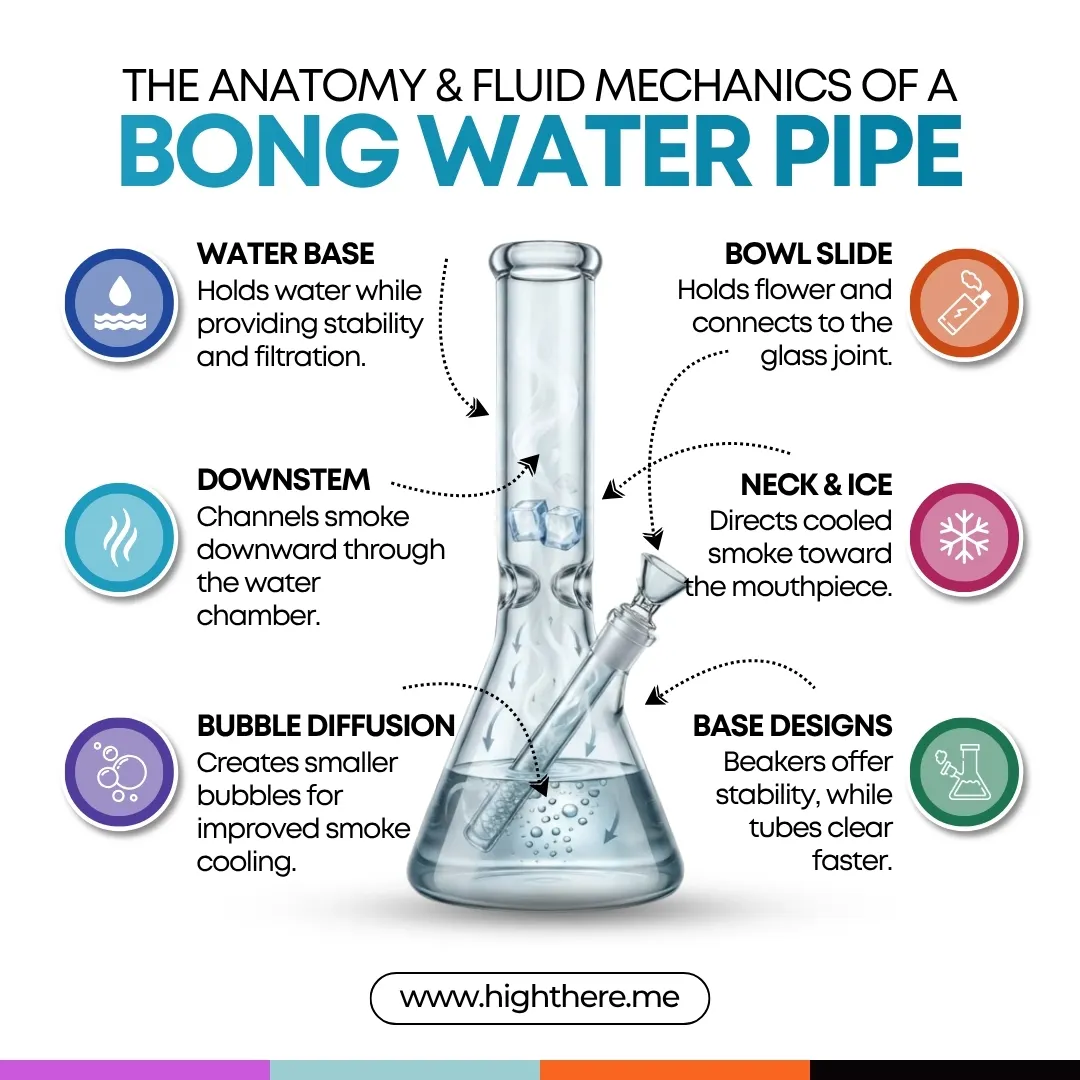
To use a bong correctly, you must first understand its anatomy. Modern water pipes are built from durable borosilicate glass. Additionally, each individual component plays a vital role in managing airflow.
Core Components of Borosilicate Glassware
The base serves as the primary water reservoir. For example, beaker bases provide high liquid capacity and physical stability. In contrast, straight-tube designs offer rapid smoke clearing with minimal drag.
The down stem channels smoke from the slide into the water. In fact, modern down stems feature tiny diffusion slits. These slits break large smoke bubbles into thousands of micro-bubbles. As a result, thermal cooling efficiency increases substantially.
The slide holds your ground cannabis flower. In addition, it fits snugly into the ground-glass joint. Common joint sizes include 14mm and 18mm connections. You lift this slide to clear the smoke chamber.
The neck directs cooled smoke toward the top mouthpiece. Meanwhile, an internal ice pinch can hold ice cubes above the waterline. Thus, ascending smoke cools even further before reaching your lips.
How Pressure and Bubbles Cool Smoke
Water pipe operation relies entirely on negative air pressure. When you inhale, you create a partial vacuum in the neck. Consequently, atmospheric pressure pushes air through the lit bowl. The smoke travels downward through the submerged down stem.
Next, the smoke emerges beneath the waterline. It forms hundreds of rising bubbles. This bubbling expands the contact area between smoke and water. Therefore, thermal heat transfer happens in milliseconds. Superheated combustion smoke cools down to room temperature instantly. Additionally, the liquid column traps heavy carbon ash particles.
Straight Tubes Versus Beaker Bases
Chamber geometry influences how water moves during an inhalation. For instance, straight tubes pull water upward in a vertical column. Because of this movement, excess water easily splashes into the mouthpiece.
In contrast, beaker bongs feature a flared conical bottom. This wide reservoir accommodates lateral water displacement. As a result, you can add more water without risking splashback. Beaker bases also provide greater physical balance on flat surfaces.
Step-by-Step Guide: How to Use a Bong Correctly
Taking a smooth hit requires careful preparation. If you rush the setup, you may cough harshly. Therefore, follow these sequential steps for the best results.
Step 1: Calibrating the Water Level
First, pour fresh water directly into the top mouthpiece. You must submerge the down stem slits by 0.5 to 1 inch. If you add too little water, smoke will not cool properly. Conversely, excess water causes dirty fluid to splash into your mouth.
Next, conduct an unlit test pull before packing any flower. Place your lips inside the rim and inhale gently. You should hear a steady, rhythmic bubbling sound. If water droplets touch your lips, pour out a small amount. In contrast, if no bubbles form, add slightly more water.
Step 2: Grinding and Packing the Bowl
Proper flower preparation ensures steady combustion. For instance, hand-torn buds burn unevenly. Meanwhile, overly fine powder clogs the slide opening. Therefore, use a quality grinder to produce a medium-coarse texture.
Next, pack your slide bowl using a density gradient. Follow this simple three-stage sequence:
- The Base: Drop a loose pinch of ground flower into the bottom. Do not compress it, so airflow remains open.
- The Core: Add a second pinch to fill the middle section. Tamp it down very lightly.
- The Surface: Fill the bowl to the rim. Press the top layer gently with your thumb to create a flat burning bed.
As a result, your bowl will light easily and maintain a steady burn.
Step 3: Creating an Airtight Mouthpiece Seal
Hold the glass base firmly with your non-dominant hand. If using a beaker bong, tilt the neck slightly toward you. This tilt ensures the down stem stays submerged. However, if using a straight tube, keep the piece upright.
Next, place your lips inside the inner rim of the mouthpiece. Do not wrap your lips around the outside glass. Your lips must form an airtight seal inside the opening. Finally, exhale fully away from the piece before you begin.
Step 4: Ignition Control and Flame Cornering
Hold your lighter in your dominant hand. Then, bring the flame toward the outer edge of the packed flower. Cannabis enthusiasts call this method cornering. Specifically, cornering burns only a small section of the surface. Consequently, you preserve unburned terpenes for subsequent hits.
Meanwhile, begin inhaling with slow, steady lung pressure. The suction pulls the flame into the flower. Soon, an active ember forms. Thick, milky smoke will fill the base and rise up the neck. Continue drawing until the chamber fills with your desired smoke volume.
Step 5: Clearing the Chamber Smoothly
Once the chamber fills, remove the flame. Next, grasp the handle of the glass slide bowl. Pull the slide out of the down stem joint smoothly.
Removing the slide opens the airflow instantly. Therefore, outside air rushes in and pushes the smoke column upward. At this moment, inhale deeply and quickly. The entire smoke volume enters your lungs in one swift draw.
Finally, exhale immediately without holding the smoke in your chest. Research shows that cannabinoids absorb across lung membranes within milliseconds. Thus, holding your breath only deposits unwanted tar in your airways.
Troubleshooting Common Water Pipe Problems
Even experienced consumers occasionally run into mechanical issues. Fortunately, most glass problems have simple solutions. Here is how you solve the most common difficulties.
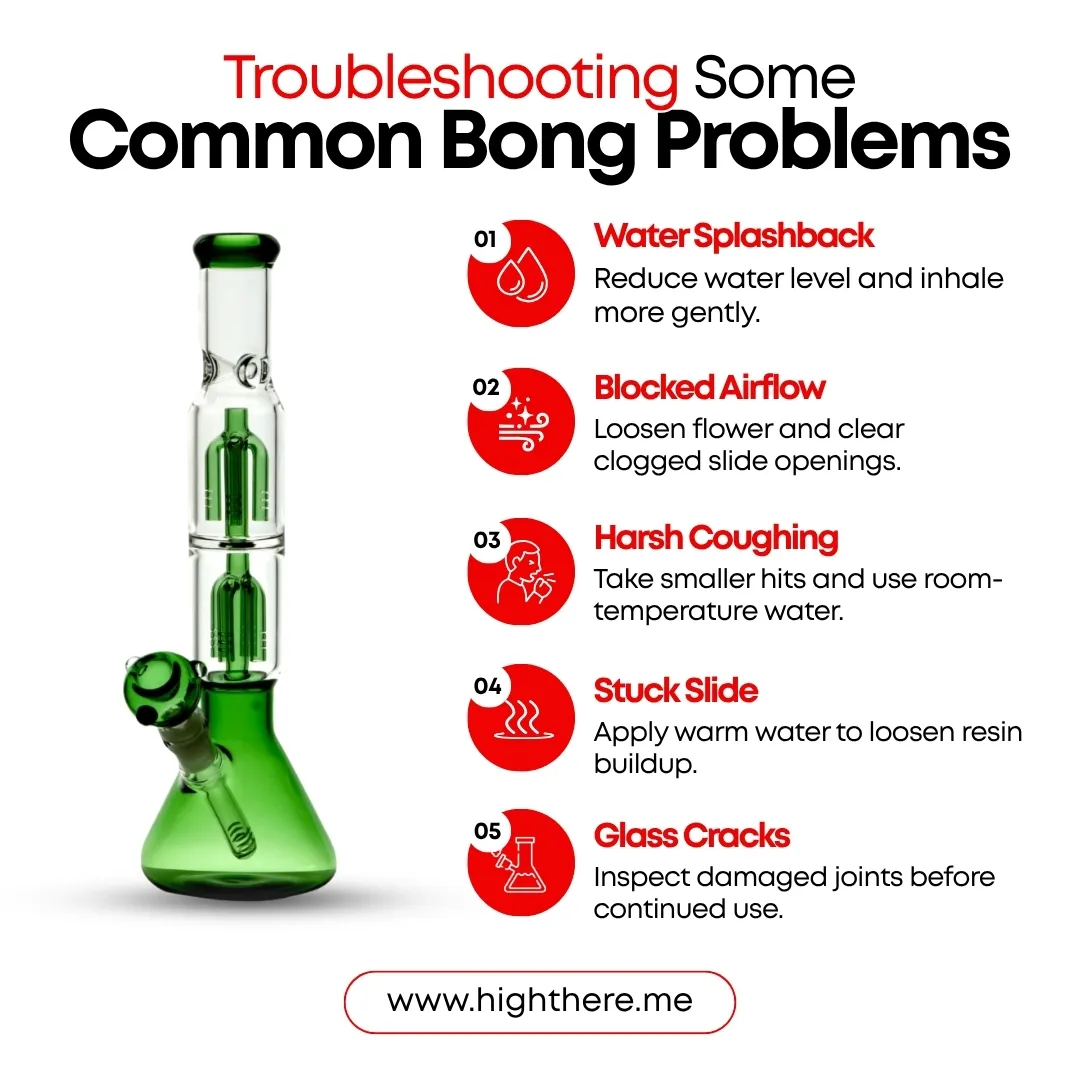
Stopping Water Splashback
Water reaching your lips indicates improper fluid calibration. Most often, the base contains too much liquid. Drain the water until it sits one inch above the slits. Alternatively, you may be inhaling with too much physical force. Instead, maintain a gentle, continuous draw.
Clearing Blocked Airflow
If you cannot pull air through the piece, check the slide. Ground flower may be packed too tightly. Furthermore, sticky resin can clog the narrow glass orifice. Remove the slide and clear the hole with a toothpick. Then, repack using a looser bottom layer.
Preventing Harsh Coughing Fits
Severe coughing usually results from taking oversized hits. For example, beginners often fill the entire tube with dense smoke. Instead, pull the slide earlier to take smaller hits. In addition, try using room-temperature water rather than freezing ice.
Freeing a Stuck Slide Bowl
Resin build up can cause frosted glass joints to bind together. Never twist the slide with metal tools. Doing so will break the delicate glass. Instead, run warm tap water over the joint seam for two minutes. The heat softens the resin, allowing you to wiggle the slide free.
The Science of the Hit: Why Bong Feel Stronger Than Joints
Many consumers notice that water pipes deliver a stronger sensation than rolled paper. In fact, this difference is rooted in respiratory pharmacokinetics.
Bolus Pharmacokinetics and Blood Absorption
When you smoke a classic cannabis joint, you take small puffs over ten minutes. Consequently, your body absorbs cannabinoids gradually over an extended window. The resulting high builds slowly and plateaus gently.
In contrast, a water pipe delivers smoke via bolus administration. The glass chamber holds hundreds of millilitres of dense smoke. When you remove the slide, you inhale that entire volume at once. Therefore, a massive dose of cannabinoids reaches your lung alveoli simultaneously.
Next, these compounds diffuse rapidly into arterial blood flow. They cross the blood-brain barrier within minutes. As a result, you experience a sharp spike in blood plasma THC levels. This rapid spike produces an intense, immediate psychoactive peak.
The Filtration Paradox: What Water Actually Absorbs
Many people believe that bong water removes all harmful toxins. However, scientific research shows a more complex reality. For instance, laboratory studies evaluated water pipe smoke chromatography.
Researchers discovered that water traps ash, but it also absorbs some cannabinoids. Cannabinoids are hydrophobic, yet they cling to solid particles in water. Consequently, water pipes produce a slightly lower cannabinoid-to-tar ratio than unfiltered joints. Thus, water pipes provide cooler smoke, but they do not eliminate combustion tars.
Advanced Thermal Strategies: Ice Pinches Versus Warm Water
Most smokers automatically fill their bongs with ice-cold water. However, thermal science suggests that freezing temperatures have drawbacks. You should weigh both options before your next session.
The Hidden Drawbacks of Ice Pinches
Dropping ice cubes into the neck pinch certainly drops smoke temperature. Nevertheless, freezing air loses its relative humidity. Inhaling cold, dry air can trigger sudden bronchoconstriction in sensitive airways. As a result, many consumers experience sudden coughing fits despite the cold draw.
The Soothing Benefits of Warm-Water Percolation
Conversely, filling your base with warm tap water offers distinct benefits. Never use boiling water, which damages glass. Warm water increases relative humidity inside the chamber. Therefore, the smoke turns into a warm, soothing vapor.
Furthermore, warm moisture thins mucus and lubricates throat tissue. In addition, warm water prevents aromatic terpenes from condensing onto cold glass walls. Thus, you enjoy richer botanical flavors with less airway irritation.
Water Pipe Hygiene and Biofilm Prevention
Dirty glass is more than an unsightly nuisance. In fact, neglecting your water pipe creates serious respiratory hazards.
Respiratory Hazards of Stagnant Bong Water
Cannabis combustion deposits dissolved ash, plant sugars, and saliva into the water. Within 24 hours, bacteria begin colonizing the stagnant pool. Specifically, common microorganisms include Pseudomonas and mold spores.
Soon, a slimy biofilm coats the inner glass waterline. Inhaling through dirty water aerosolizes these harmful pathogens. Consequently, you pull bacterial endotoxins deep into your lungs. Therefore, you must dump your bong water after every single session.
The Salt and Alcohol Deep Cleaning Protocol
Regular deep cleaning keeps your glass pristine and sanitary. Fortunately, you only need two inexpensive household ingredients:
- Coarse salt, such as kosher salt or Epsom salt
- 91% or 99% isopropyl alcohol
First, disassemble your piece by removing the slide and downstream. Place these small glass pieces into a sealable plastic bag. Next, pour two tablespoons of coarse salt into the empty bong base. Then, add half a cup of isopropyl alcohol.
Next, seal the openings with cleaning caps or your hands. Shake the pipe vigorously for sixty seconds. The alcohol dissolves sticky resin, while salt crystals scrub the glass without scratching. Finally, rinse all parts with warm running water for two full minutes. Allow the glass to air dry before packing fresh flower.
Bong vs. Joints: A Technical Comparison
Choosing between glass and rolled paper depends on your setting and goals. Both consumption formats have distinct pros and cons.
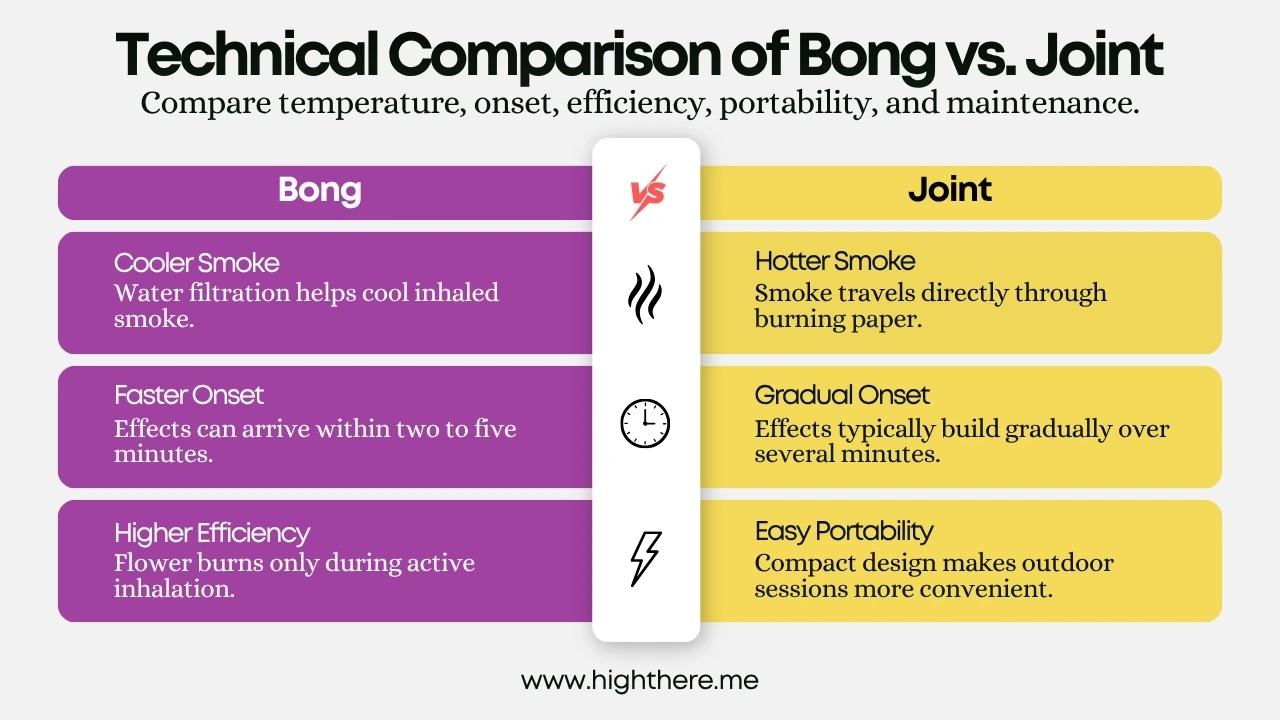
For example, learning the art of rolling a joint offers unrivalled portability for outdoor use. In contrast, water pipes remain the preferred tool for efficient, stationary home sessions.
| Feature | Borosilicate Water Pipe | Traditional Hand-Rolled Joint |
|---|---|---|
| Inhalation Temperature | Cooler smoke due to water filtration | Hotter smoke drawn directly from paper |
| Onset Speed | Rapid onset within two to five minutes | Gradual onset over ten to twenty minutes |
| Material Efficiency | High efficiency with zero resting burn | Burns continuously between puffs |
| Portability | Stationary use due to fragile glass | Pocket-sized and highly travel-friendly |
| Maintenance | Requires regular water swaps and cleaning | Zero cleaning required after disposal |
Additionally, glassware is ideal for concentrate-infused blends. If you consume high-potency THCA diamonds and flower, smoking through a bong prevents messy paper runs. The concentrated extract vaporizes evenly across the heated glass bowl.
Cannabis Glassware in Washington, DC: Legal Realities
Using a water pipe in the District of Columbia requires knowledge of local regulations. Although cannabis is widely available, consumption rules depend heavily on your location.
Initiative 71 and Paraphernalia Decriminalization
District voters approved Initiative 71 in 2014. Under this law, adults 21 and older may possess up to two ounces of cannabis. Furthermore, adults may share up to one ounce without financial exchange.
Additionally, the District amended D.C. Code Section 48-1103. This amendment decriminalized personal cannabis ingestion accessories. Therefore, possessing a clean or used water pipe for personal consumption is lawful under municipal code.
Private Consumption Boundaries and Balcony Rules
However, you may only use water pipes inside private residences. Landlords in multi-family apartments across Dupont Circle and Adams Morgan may still restrict smoking indoors. Always review your building lease to avoid tenancy violations.
Moreover, smoking on balconies visible from public sidewalks can lead to municipal fines. The District classifies open public spaces as restricted zones. Therefore, keep your sessions indoors and use an air purifier if necessary.
The Federal Land Boundary in the District
Importantly, federal land covers roughly 28% of Washington, DC. Federal territory includes the National Mall, Rock Creek Park, and the Georgetown Waterfront. On federal land, local District decriminalization does not apply.
Instead, federal law governs these public spaces strictly. Possessing cannabis or used glassware on federal property remains a federal misdemeanour. Consequently, never transport your water pipe to public parks or monuments.
Sourcing Clean Cultivars Across DC Neighbourhoods
To enjoy smooth water pipe draws, you need fresh, properly cured cannabis. Dry buds burn into harsh ash that dirties your water immediately. In contrast, sticky flower burns evenly and releases rich flavors.
Explore our wide selection of dense, high-terpene flower cultivars to find aromatic strains suited for glass. Whether you live in Logan Circle, Dupont Circle, or Georgetown, quality flower makes all the difference.
Frequently Asked Questions (FAQs) about Bong
Q : How do bong get you more high?
A : Bongs produce a stronger effect because they deliver smoke via bolus inhalation. Unlike joints, which provide small puffs over time, a bong condenses a large smoke cloud inside its neck. When you pull the slide, you inhale that entire cloud at once. Consequently, cannabinoids absorb across lung alveoli rapidly, creating a steep spike in blood plasma THC levels.
Q : Is a bong considered a drug?
A : No, a bong is an inert piece of consumption hardware. It is typically made from borosilicate glass, silicone, or ceramic. Under federal law, pipes with drug residue may be classified as paraphernalia. However, within Washington, DC, Initiative 71 decriminalized personal cannabis glassware for adults 21 and older on private property.
Q : Why use a bong instead of a joint?
A : Consumers choose bongs because water filtration significantly cools hot smoke. Furthermore, the water traps heavy combustion ash before it reaches your mouth. Using a water pipe also eliminates burning rolling papers and adhesives. Finally, bongs conserve flower because the herb only burns when you apply heat.
Q : What happens after smoking a bong?
A : After taking a hit, cannabinoids cross your pulmonary membranes into arterial blood within seconds. You may experience facial warmth, mild coughing, and an elevated heart rate. Peak psychoactive effects typically occur within two to ten minutes. Because onset is rapid, beginners should wait fifteen minutes before taking another hit.
Q : Is a bong cleaner than a joint?
A : A bong provides cleaner smoke regarding physical ash capture and thermal comfort. However, scientific testing shows that water does not selectively remove chemical tars over cannabinoids. In fact, water pipes produce a slightly higher tar-to-THC ratio than unfiltered joints. Therefore, bongs feel smoother, but they still produce combustion by products.
Elevate Your Bong Using Experience with Highthere
A high-end glass piece deserves exceptional cannabis flower. Old, dry buds produce harsh smoke and foul-tasting residue. Conversely, properly cured flower burns cleanly into soft white ash, delivering pure terpene profiles across every hit.
Highthere provides premium, lab-verified cannabis flower to enthusiasts throughout Washington, DC. Whether you are relaxing at home in Adams Morgan or hosting friends near Logan Circle, our team offers fast, discreet, same-day delivery. Explore our complete selection of top-shelf flower and smoking accessories by visiting the curated dispensary menu at Highthere today.