 Skip to content

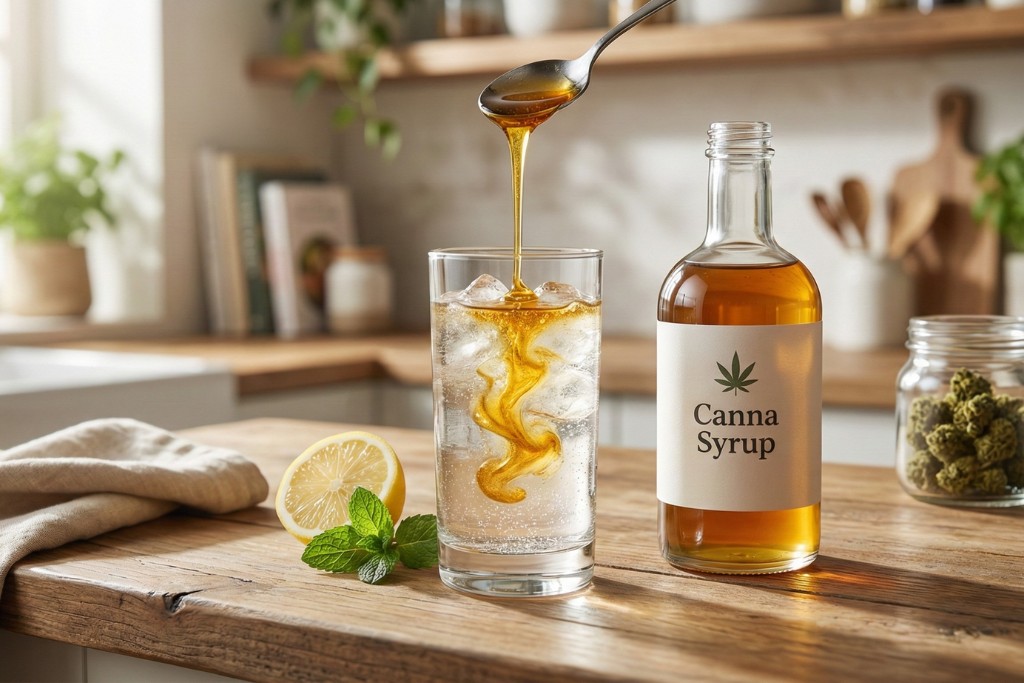
Imagine elevating your morning coffee, weekend pancakes, or evening mocktail with a single, potent pour. This isn’t just about sweetness; rather, it is about precision, flavor, and a completely personalized cannabis experience. Canna syrup, often hailed as the versatile game-changer in the world of edibles, offers a discreet and delicious way to consume cannabis. Whether you are a culinary enthusiast in Washington DC or simply looking for a smokeless alternative, mastering this liquid gold can significantly transform your relationship with the plant.
Currently, the cannabis edibles market is experiencing explosive growth. In fact, recent data estimates the global market will reach approximately $14.8 billion in 2025 and could soar to over $54 billion by 2034. Consequently, consumers are increasingly seeking customizable options like canna syrup that offer consistent dosing and rapid onset. By the end of this guide, you will have the knowledge to craft high-quality syrup right in your own kitchen, rivaling even the top-tier products found on dispensary shelves.
What is Canna Syrup?
At its core, canna syrup is a cannabis-infused simple syrup. It combines the basic elements of sugar and water with the complex profile of cannabinoids. Often referred to as THC syrup or cannabis-infused liquid, it serves as a sweet vehicle for delivering Delta 9 THC and other cannabinoids into your system. Unlike traditional edibles like brownies or cookies, which require the digestion of heavy solids, this infused sweetener allows for a seamless ingestion process when mixed into beverages.
This versatility makes it a favorite among both recreational cannabis users and medical patients. Furthermore, whether you are looking to sweeten your tea or create a canna-cocktail, this syrup acts as the perfect base. It effectively bridges the gap between a culinary ingredient and a potent tincture, offering a consistency that mimics maple syrup or agave.
The Science Behind Potent Canna Syrup: Why Decarboxylation is Key
Before you mix any ingredients, you must first understand the chemistry that makes psychoactive effects possible. Surprisingly, raw cannabis does not actually contain high levels of Delta 9 THC. Instead, it is rich in THCa (tetrahydrocannabinolic acid), a non-intoxicating precursor.
Understanding Decarboxylation
Decarboxylation, often shortened to “decarb,” is the process of applying heat to cannabis plant material to alter its chemical structure. Think of it as “activating” the plant. Without this crucial step, your infused syrup would have potential therapeutic benefits but would largely lack the signature euphoria most users seek.
The Transformation: THCa to Psychoactive Delta 9 THC
When you expose cannabis buds or cannabis trim to heat over time, a carboxyl group is removed from the THCa molecule. Subsequently, this converts it into Delta 9 THC. While this conversion typically happens instantly when you smoke or vape, you must manually replicate this process in an oven before infusion to ensure your liquid gold is effective.
How Decarboxylation Impacts Canna Syrup Potency
Proper decarboxylation ensures you are getting the maximum potency from your material. If you skip this, or do it incorrectly, your canna syrup might be weak. Recent data suggests that precise temperature control (around 240°F) helps retain terpenes while fully activating cannabinoids. Therefore, mastering this step leads to a more robust “entourage effect” in your final mixture.
Ingredients for High-Quality Canna Syrup
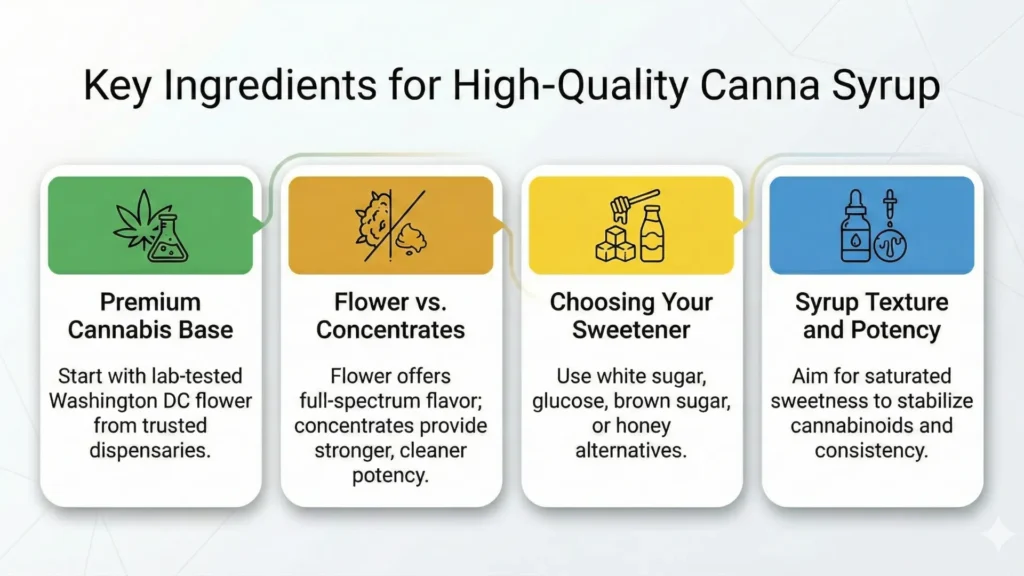
The quality of your final product depends heavily on your starting materials. Residents in Washington DC have access to premium cannabis flower at dispensaries like Highthere, ensuring your syrup starts with a high-quality base.
Choosing Your Cannabis: Flower vs. Concentrates
You can infuse the liquid using either cannabis flower or cannabis concentrates like hash oil or distillate.
- Flower: Offers a full-spectrum experience with natural terpenes. Although it requires straining, it often results in a more well-rounded effect.
- Concentrates: These are potent and dissolve easily. However, they can sometimes lack the nuances of a specific cannabis strain.
Selecting Sweeteners for Your Canna Syrup
White granulated sugar is the standard for making simple syrup. Nevertheless, you can experiment with glucose syrup, brown sugar, or even honey. The primary goal is to create a saturated solution that preserves the cannabinoids in your mixture.
The Liquid Base: Water and Vegetable Glycerin
Water creates the volume; however, vegetable glycerin is the secret weapon. Since cannabinoids are fat-soluble and not water-soluble, adding food-grade vegetable glycerin (or vegetable glycerine) helps bind the THC to the sugary mixture. Acting as an emulsifier, it increases bioavailability, meaning your body can absorb the cannabinoid content more efficiently from the canna syrup.
Your Canna Syrup Toolkit: Essential Equipment
You do not need a commercial laboratory to make great syrup. In fact, most of these items are likely already in your kitchen.
- Basic Kitchen Supplies: You will need medium saucepans for boiling, measuring cups for accuracy, and a whisk to blend the sugar and liquids seamlessly.
- Infusion and Straining Tools: A fine mesh strainer and cheesecloth are vital for removing plant material to ensure a smooth texture. Additionally, a mason jar is perfect for the infusion process, and a funnel helps with bottling your creation.
- Decarboxylation Essentials: A baking sheet lined with parchment paper (or baking paper) is standard for decarbing flower in the oven.
- Optional Equipment for Efficiency: For those who want precision without the mess, cannabis infusion machines like the LEVO Lux or LEVO II Oil Infuser can automate the drying, activating, and infusing steps.
- Storage Solutions: Finally, an airtight glass bottle or storage container is essential to keep your syrup fresh in the refrigerator.
Step-by-Step Guide: Crafting Your Perfect Canna Syrup
Follow this recipe to create a versatile, golden infused liquid. This method uses cannabis flower, but it can be adapted for concentrates.
1. Step 1: Decarboxylate Your Cannabis
- First, preheat your oven to 240°F (115°C).
- Next, break your cannabis flower into small, even pieces (do not grind it to dust).
- Spread the material on a baking sheet lined with parchment paper.
- Bake for 30–40 minutes. Consequently, the buds should turn a golden-brown color and smell aromatic.
- Finally, remove and let the decarboxylated cannabis cool.
2. Step 2: Prepare Your Base
- In a saucepan, combine equal parts water and sugar (e.g., 2 cups water, 2 cups granulated sugar).
- Bring the mixture to a boil, stirring continuously until the sugar is fully dissolved.
- Once dissolved, reduce the heat to a gentle simmer.
3. Step 3: Infuse Your Cannabis
- Add your decarboxylated flower directly to the simmering liquid.
- Immediately stir in 2-3 tablespoons of vegetable glycerin. This step is crucial for absorption and texture.
- Let the mixture simmer on low heat for about 30 minutes. Important: Do not let it boil vigorously, as high heat can degrade the THC in your canna syrup.
- Meanwhile, stir frequently to prevent the flower from sticking to the bottom.
4. Step 4: Strain for Purity
- Place a fine mesh strainer lined with cheesecloth (or a coffee filter for ultra-clarity) over a clean bowl or jar.
- Carefully pour the hot mixture through the strainer.
- Caution: The liquid is basically boiling water and sugar, so be extremely careful not to burn yourself.
- Gently squeeze the cheesecloth to extract the remaining liquid. However, do not squeeze too hard, or you will introduce unwanted chlorophyll into your syrup.
5. Step 5: Cool, Store, and Enjoy
- Allow the liquid to cool to room temperature. It will thicken naturally as it cools.
- Pour it into a sterilized bottle or mason jar using a funnel.
- Store it in the refrigerator to significantly extend its shelf life.
Mastering Canna Syrup Potency & Dosing
One of the biggest advantages of syrup over traditional edibles is the ability to micro-dose. However, understanding the math is essential for a safe experience. Below is a comparison of how syrup stacks up against other methods based on consumer search trends.
| Comparison Factor | Canna Syrup | Traditional Edibles |
|---|---|---|
| Onset Time | Fast (20-45 mins) due to liquid absorption | Slow (45-90 mins) due to solid digestion |
| Dosing Precision | High (Easy to measure exact ml) | Moderate (Harder to split cookies/brownies) |
| Versatility | High (Mix in drinks, food, or sublingual) | Low (Eaten as-is) |
| Duration | 4-6 Hours | 6-8 Hours |
Understanding Your Cannabis’s Potency
If you buy flower from a reputable dispensary like Highthere in Washington DC, the label will state the THCa percentage. For example, if you have 1 gram (1000mg) of flower at 20% THC, you theoretically have 200mg of THC total.
Calculating Your Canna Syrup’s THC Content
After decarboxylation and infusion, you typically retain about 60-80% of that THC in the final product due to process loss.
- Formula: (Weight of flower in mg) x (THC %) x 0.7 (extraction efficiency) = Total mg THC.
- Example: If you infuse that 1 gram into 100ml of liquid, you have roughly 140mg of THC total. Therefore, a 10ml dose of canna syrup would contain 14mg of THC.
Responsible Dosing Strategies
Start with a teaspoon, wait 45 minutes, and assess. Because THC syrup often has a faster onset than solid edibles—sometimes as quick as 20-30 minutes—it is easier to titrate your dose.
Onset, Duration, and Absorption of Canna Syrup Effects
While vape pens hit instantly, canna syrup offers a middle ground. The duration of effects can last 4–6 hours. Nano-emulsification technology, now common in commercial products, can speed this up further. However, homemade syrup usually behaves like a fast-acting edible because the liquid is processed faster by the digestive system.
Beyond the Basics: Elevating Your Canna Syrup
Once you have mastered the base recipe, the sky is the limit. Indeed, there are numerous ways to customize your sweet creation.
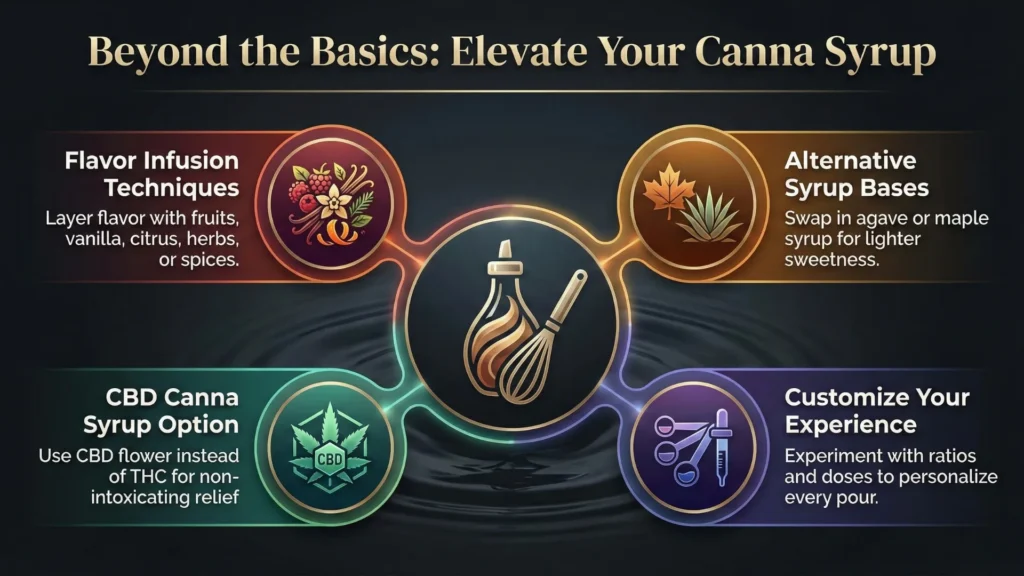
Flavor Infusion Techniques
You can add fruit extracts, vanilla beans, or citrus peels during the simmer. Specifically, strawberry and mint are popular choices for cocktails, while cinnamon works wonders for coffee sweeteners.
Exploring Alternative Canna Syrup Bases
For a healthier twist, try using agave nectar or maple syrup as your base. Just ensure you still add the vegetable glycerin or an alternative fat source to help the cannabinoids bind to the liquid.
Making CBD Canna Syrup for Non-Psychoactive Effects
If you prefer relaxation without the high, simply swap the THC flower for CBD hemp flower or a high-CBD cannabis strain. The process remains exactly the same; however, the result is a calming, non-intoxicating CBD syrup.
Creative Ways to Enjoy Your Canna Syrup
This infused liquid is incredibly versatile in cannabis cuisine. Here are a few creative applications:
- Refreshing Drinks & Cocktails: Mix your syrup into lemonades, smoothies, or sparkling water. For example, a popular choice is the California Sober Dirty Shirley—mix grenadine, lime soda, and a dose of canna syrup, then top with maraschino cherries.
- Sweet Treats & Culinary Delights: Drizzle it over waffles, pancakes, or yoghurt. Furthermore, it is excellent for keeping a layer cake moist.
- Direct Consumption: You can take it sublingually (under the tongue) for faster absorption, similar to a tincture.
Troubleshooting Common Canna Syrup Challenges
Even seasoned chefs encounter hiccups. Here is how to fix common issues with your batch:
- “My Canna Syrup is Grainy!” This usually happens if the sugar wasn’t fully dissolved or the ratio of sugar to water was too high. To fix this, reheat the mixture gently and add a small splash of water or corn syrup to stabilize it.
- “My Canna Syrup Isn’t as Potent as Expected!” You likely didn’t decarb long enough or at the right temperature. Therefore, ensure your oven is calibrated. Alternatively, you may not have used enough fat (glycerin) to extract the cannabinoids into the liquid.
- “My Canna Syrup Tastes Too Grassy!” This flavor profile comes from chlorophyll. To avoid this, do not grind your weed too fine. Furthermore, do not squeeze the cheesecloth aggressively during straining.
Storage and Safety for Your Canna Syrup
Optimal Storage Conditions
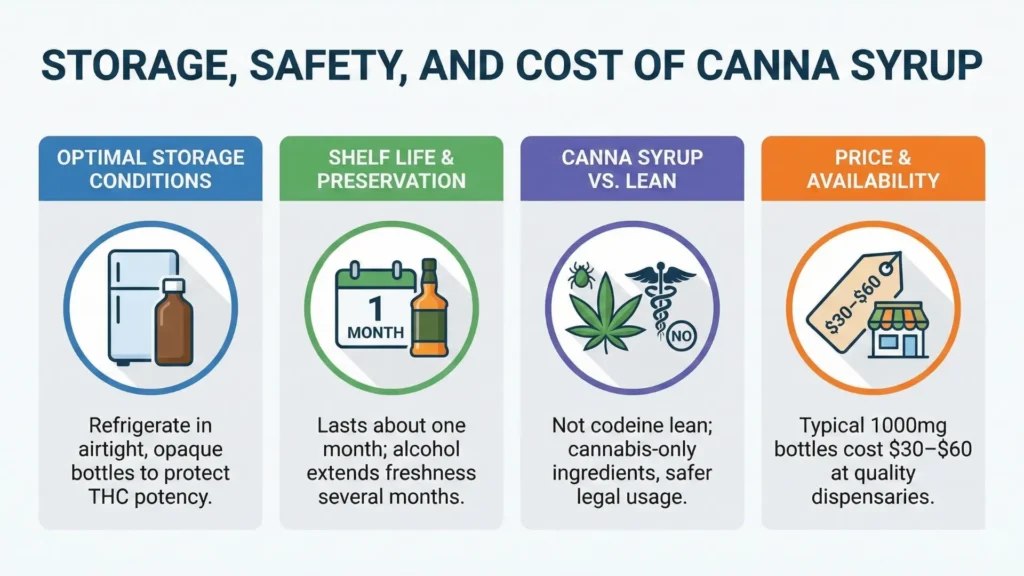
Always store your infused syrup in an airtight container in the refrigerator. Since light and heat degrade THC, an opaque bottle is ideal for preserving your creation.
Expected Shelf Life of Canna Syrup
A standard simple syrup can last 1 month in the fridge. However, adding a tablespoon of vodka or high-proof grain alcohol can act as a preservative, extending the life of your canna syrup to 3–4 months.
Canna Syrup vs. “Lean” or “Sizzurp”
It is crucial to distinguish canna syrup from “lean” (a dangerous mixture involving codeine). This product is purely a cannabis derivative. Although the comparison often arises in pop culture, responsible cannabis users know the difference lies in safety, legality, and ingredients.
Canna Syrup Market Context: Price and Availability
For those purchasing rather than making, the price of THC syrup in the US typically ranges from $30 to $60 for a 1000mg bottle. In Washington DC, where quality standards are high, you can expect similar pricing at premium vendors. For the best selection of cannabis flower to make your own, or to browse ready-made cannabis-infused products, check out Highthere.
Conclusion: Your Journey to Canna Syrup Mastery
From the science of decarboxylation to the art of the simmer, you now possess the knowledge to create your own artisanal canna syrup. This golden liquid unlocks a new tier of culinary freedom, allowing you to turn everyday beverages and meals into infused experiences.
We encourage you to experiment with flavors and dosing to find your perfect balance. Remember, the quality of your syrup starts with the quality of your flower. For the finest cannabis buds and expert advice in the District, visit Highthere.
Frequently Asked Questions
1. Is canna syrup legal in Washington DC?
Yes, under Initiative 71, adults 21 and over in Washington DC can possess and consume cannabis. Consequently, you can purchase cannabis products or receive them as gifts from compliant dispensaries like Highthere. However, always remember to consume your infused goods on private property.
2. How long does it take for the syrup to kick in?
This liquid typically has a faster onset than solid edibles because liquids are absorbed more quickly by the digestive system. Therefore, you may feel effects in as little as 20–30 minutes, though it can take up to an hour depending on your metabolism.
3. Can I use concentrates instead of flower?
Absolutely. In fact, using cannabis concentrates or distillate can actually reduce the herbal flavor and make the process easier since less straining is required. Just ensure you still use an emulsifier like vegetable glycerin.
4. Does the syrup need to be refrigerated?
Yes. Since homemade syrup contains no heavy commercial preservatives, it should be refrigerated to prevent mold and bacterial growth. Generally, it will stay fresh for about a month when chilled properly.
Elevate Your Edible Experience Today
Ready to create your own potent concoctions or find the perfect pre-made blend? Whether you need premium flower for your homemade batch or expert advice on consumption, Highthere is your trusted destination in Washington DC. Visit our store or browse online to discover quality products that guarantee a safe and enjoyable journey.