 Skip to content

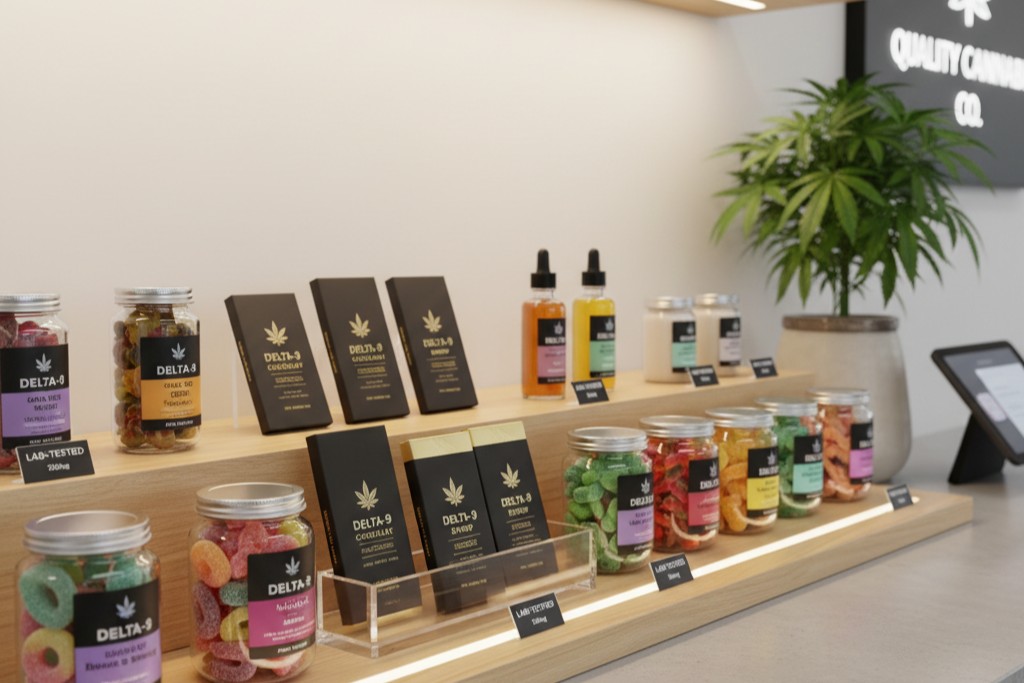
The cannabis landscape has undergone a seismic shift in recent years, transforming significantly from a niche underground culture into a sophisticated marketplace brimming with innovation. Among the most talked-about advancements is the widespread availability of Delta-9 THC edibles. For residents and visitors in the Washington DC area, understanding this surge is crucial to navigating the myriad of options available. Whether you are a seasoned connoisseur or a curious newcomer, the buzz surrounding these potent treats is impossible to ignore.
Delta-9 THC, or delta-9-tetrahydrocannabinol, is the primary psychoactive compound found in cannabis plants responsible for the signature “high.” While traditionally associated with smoking, modern food science has effectively allowed for the creation of precise, delicious, and accessible edible forms. From classic Gummy treats to sophisticated syrups, Delta-9 THC edibles offer a smoke-free alternative that appeals to a broad demographic. However, with great popularity comes a need for deep understanding—not just of the product itself, but also of the complex legal frameworks like the 2018 Farm Bill and the biological mechanisms that dictate your experience.
What Are Delta-9 THC Edibles?
At their core, Delta-9 THC edibles are food products infused with delta-9-tetrahydrocannabinol. Unlike smoking or vaping, which delivers cannabinoids directly to the lungs and bloodstream, edibles are ingested and subsequently processed through the digestive system. This category specifically includes a vast array of product types, ranging from the ubiquitous THC Gummies and chocolates to beverages and baked goods.
In the context of the current market, specifically in places like Washington DC, you will often encounter two distinct categories: those derived from marijuana (sold in licensed dispensaries) and hemp-derived Delta-9 products. The latter has exploded in popularity due to federal loopholes, allowing consumers to purchase psychoactive products that technically align with the legal definition of hemp.
The Growing Popularity of Hemp-Derived Delta-9
The surge in hemp-derived products is a direct result of legal definitions meeting consumer demand. Because hemp is defined as cannabis containing less than 0.3% Delta-9 THC by dry weight, manufacturers have found that by increasing the total weight of the edible (like a large brownie or a heavy gummy), they can legally include a potent dose of THC while staying below the percentage threshold. Consequently, this ingenuity has brought Delta 9 Gummies and other treats to a wider audience, extending the reach of cannabinoids beyond traditional boundaries. Consumers can now purchase these products more easily than ever before.
Delta-9 THC Edibles vs. Other Cannabinoids: A Quick Comparison
To help you choose the right product, here is a comparison based on the most frequent consumer search trends regarding potency, legality, and effects.
| Feature | Hemp-Derived Delta-9 THC | Marijuana-Derived Delta-9 THC | Delta-8 THC | CBD (Cannabidiol) |
|---|---|---|---|---|
| Primary Effect | Potent Euphoria & Relaxation | Potent Euphoria & Relaxation | Mild Euphoria (50-70% Potency) | Non-Intoxicating Wellness |
| Federal Legality | Federally Legal (Farm Bill Compliant) | Federally Illegal (State Laws Apply) | Federally Legal (Gray Area in Some States) | Federally Legal |
| Typical Onset | 45 mins – 2 hours | 45 mins – 2 hours | 45 mins – 2 hours | 30 mins – 1 hour |
| Drug Test Risk | High Risk (Triggers Positive) | High Risk (Triggers Positive) | High Risk (Triggers Positive) | Low Risk (Isolate) / Med Risk (Full Spec) |
| Best For | Recreational & Deep Relief | Recreational & Medical Use | Mild Buzz & Anxiety Relief | Anxiety, Inflammation & Sleep |
Understanding Delta-9 THC: The Science Behind the Experience
To truly appreciate the effects of an edible, one must look at the molecular interactions happening beneath the surface. The science of cannabis is complex, involving intricate biological systems and chemical transformations.
What is Delta-9-Tetrahydrocannabinol (Delta-9 THC)?
Delta-9-tetrahydrocannabinol is the most abundant and well-known cannabinoid in cannabis sativa. It is chemically similar to the body’s own endocannabinoids, which effectively allows it to bind to receptors in the brain and nervous system. While its cousin CBD (Cannabidiol) is celebrated for non-intoxicating wellness benefits, Delta-9 is the driver of the euphoric, relaxing, and sometimes altering effects sought by recreational users. Furthermore, it is the benchmark against which all other cannabinoids—like delta-8-tetrahydrocannabinol, THC-P, and THCH—are measured.
How Delta-9 THC Interactions with Your Body: The Endocannabinoid System
Your body possesses a vast network of chemical signals and cellular receptors known as the endocannabinoid system (ECS). The ECS plays a critical role in regulating a host of functions, including sleep, mood, appetite, and memory.
When you consume Delta-9, it binds primarily to Cannabinoid1 receptors (CB1) located in the brain and central nervous system. This binding mimics the action of natural neurotransmitters like anandamide, often called the “bliss molecule.” By activating these receptors, Delta-9 THC influences dopamine levels, creating the pleasurable sensations associated with cannabis. Additionally, it interacts with Cannabinoid2 receptors (CB2) found in the immune system, contributing to its potential anti-inflammatory properties.
The Metabolism of Edible Delta-9 THC: Beyond Simple Ingestion
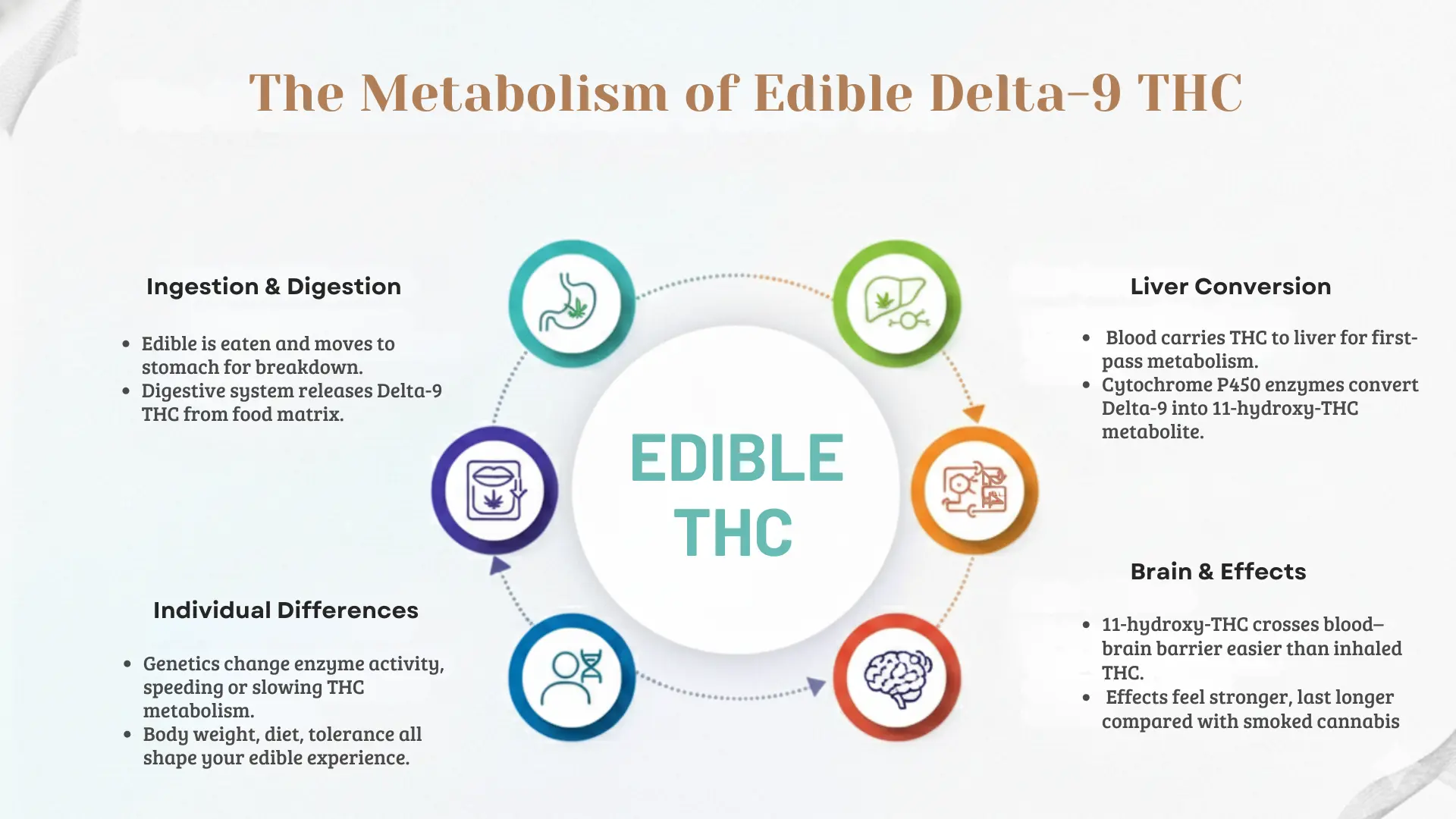
The journey of an edible is far more perilous and transformative than that of inhaled smoke. This process, known as pharmacokinetics, explains why edibles hit harder and last longer.
- Ingestion: The edible travels to the stomach.
- Digestion: It is broken down, releasing cannabinoids.
- First-Pass Metabolism: The cannabinoids travel to the liver.
Here, a crucial transformation occurs. The liver enzymes, specifically the cytochrome P450 family, convert Delta-9-THC into 11-hydroxy-THC. This metabolite is significantly more potent and crosses the blood-brain barrier more rapidly than its precursor. Therefore, 10mg of THC Gummies can feel much stronger than inhaling 10mg of vapor. Furthermore, genetics play a role; variations in P-glycoprotein and liver enzymes can make some people metabolize THC faster or slower, significantly altering the intensity of the high.
Naturally Occurring vs. Converted Hemp-Derived Delta-9 THC
A critical distinction in today’s market is the source of the cannabinoid. Delta-9 is naturally abundant in cannabis plants. However, in the hemp industry, extracting sufficient Delta-9 directly from hemp (which is low in THC) can be inefficient.
Consequently, some manufacturers use a chemical process known as cyclization to convert Cannabidiol (CBD) into Delta-9 or other isomers like delta-8-tetrahydrocannabinol. While the end molecule is chemically identical, the purity of the process matters. High-quality hemp-derived Delta-9 found at reputable shops like Highthere in Washington DC ensures that you are getting a clean product, free from the byproducts of poor chemical conversion.
The Legal Landscape of Hemp-Derived Delta-9 Edibles
Navigating the laws surrounding cannabis can feel like walking through a maze. The rules shift depending on where you are and what source plant the product comes from.
The 2018 Farm Bill and Industrial Hemp
The turning point for the industry was the Agricultural Improvement Act of 2018, commonly known as the 2018 Farm Bill. This piece of federal legislation removed Industrial Hemp from the Controlled Substances Act, legally defining it as Cannabis sativa L. with a delta-9 THC concentration of not more than 0.3% on a dry weight basis.
This definition inadvertently created the “edible loophole.” Since the law applies to “dry weight,” a heavy gummy can legally contain a significant amount of hemp-derived THC. For example, a 5-gram gummy (5000mg) can legally contain up to 15mg of Delta-9 THC (0.3% of 5000mg), which is a standard, potent recreational dose.
Federal vs. State Regulations: Navigating the Complexities
While the Farm Bill opened the doors federally, individual states have their own say. Some states have moved to ban or restrict these hemp-derived cannabinoids. However, Washington DC remains a unique hub. The District has a vibrant cannabis culture, often operating under Initiative 71 (I-71) or medical programs.
For consumers in DC, accessing hemp-derived products is generally straightforward, but quality varies wildly. Therefore, it is essential to source products from established vendors like Highthere, who understand both the local compliance landscape and the importance of lab-tested safety.
Interstate Shipping: The Role of USPS and Federal Legislation
Because hemp is federally legal, USPS and private carriers can ship hemp-derived Delta-9 products across state lines, provided they adhere to the Farm Bill of 2018 regulations. This has subsequently opened up the market, allowing consumers to order THC Gummies online. However, keeping abreast of the latest legislative changes is vital, as federal legislation is constantly being debated and could shift the rules for shipping and age verification protocols.
Navigating the Delta-9 Edibles Market: Product Types and Quality
The shelves of a modern dispensary are a far cry from the plastic baggies of the past. Today’s market is defined by variety, sophistication, and branding.
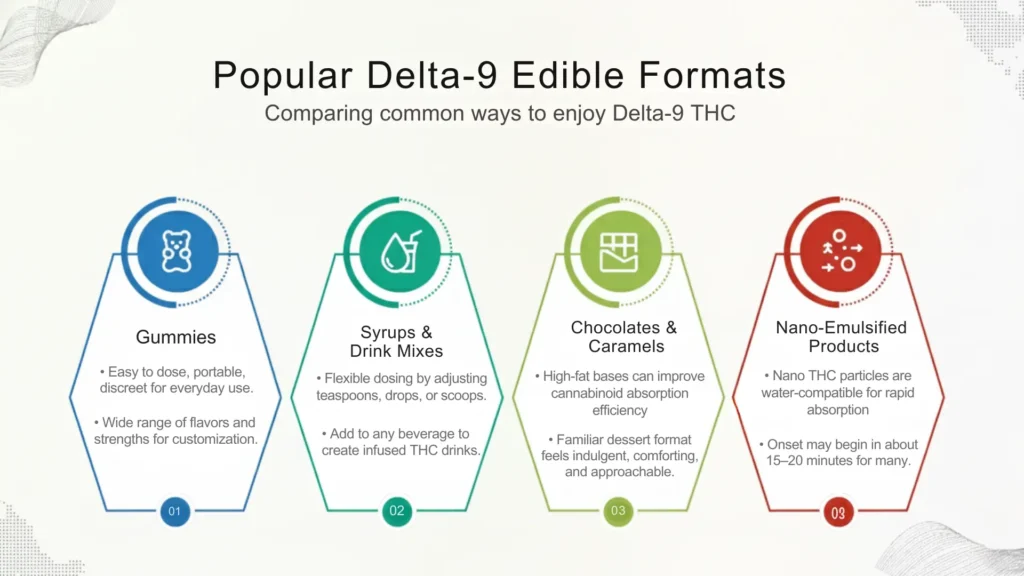
Popular Delta-9 Edible Formats
Innovation has moved beyond the brownie.
- Gummies: The undisputed king of edibles. Easy to dose, portable, and available in endless Flavors.
- Syrups and Drink Mixes: Products like Agave THC Syrup and Tropical THC Drink Mix allow users to craft their own infused beverages.
- Chocolates and Caramels: High-fat content in chocolates can actually aid in cannabinoid absorption.
- Nano-Emulsified Products: Using Nano THC technology, these edibles break down cannabinoids into microscopic particles. Nano-emulsified THC is water-soluble, bypassing much of the digestive lag and offering an onset time as fast as 15-20 minutes, compared to the typical hour for standard edibles.
Decoding Product Labels: What to Look For
Reading a label is your first line of defense. A compliant label should list:
- Serving Size and Cannabinoid potency per serving (e.g., 10mg per gummy).
- Ingredients, including Pectin (for vegan gummies) or Gelatin, Glucose Syrup, Citric Acid, and colorings like FD&C Blue 1 or FD&C Red 3.
- Source indication, often labeled as hemp-derived or American-grown hemp.
- Child-safe lid and child-resistant containers are a must for safety and compliance.
Ensuring Quality and Safety: The Role of Third-Party Lab Testing
Never consume an edible without checking the Certificate of Analysis (COA). Reputable brands and dispensaries like Highthere will always provide access to these third-party lab reports.
Laboratories use sophisticated techniques like High-performance liquid chromatography (HPLC) and Gas chromatography triple quad mass spectrometry to analyze batches. A comprehensive lab analysis checks for:
- Potency: Confirming the Delta-9 levels match the label.
- Purity: Ensuring no heavy metals, pesticides, or microbial impurities.
- Solvents: Verifying that no harmful extraction chemicals remain.
- Cannabinoid Profile: checking for other compounds like Cannabidiolic acid, Cannabigerol (CBG), or Cannabichromene (CBC).
Labs like InfiniteCAL are industry standards for these rigorous lab testing requirements. If a product lacks a lab report, it is a red flag.
Price Watch: National Trends vs. Washington DC
When budgeting for your cannabis experience, it helps to know the landscape. Nationally, a standard pack of hemp-derived Delta 9 Gummies (typically 100mg-200mg total THC) ranges from $25 to $45.
In Washington DC, prices can be slightly higher, reflecting the premium nature of the urban market and the high cost of operating compliant storefronts. However, shopping at a dedicated dispensary like Highthere ensures you aren’t paying for flashy packaging with empty promises. You are paying for dispensary-grade potency and independent lab reports that verify you are getting safe, effective cannabinoids.
Your Delta-9 Edible Experience: Dosing, Effects, and Maximizing Enjoyment
The difference between a relaxing evening and an overwhelming ordeal often comes down to one thing: dosing.
Finding Your Ideal Serving Size and Dosing Strategy
The mantra for edibles is universal: “Start low and go slow.”
- Beginner: 2.5mg – 5mg.
- Intermediate: 10mg – 15mg.
- High Tolerance: 20mg+.
Since hemp-derived THC must be metabolized by the liver, patience is key. Therefore, wait at least two hours before considering a second dose. Refer to a dosing chart for guidance.
What to Expect: Onset Time, Duration, and Psychoactive Effects
- Onset: 30 minutes to 2 hours (faster for Nano THC).
- Peak: 2 to 4 hours after ingestion.
- Duration: Can last 6 to 8 hours, or even longer depending on your metabolism.
Users typically report a “body high,” relaxation, euphoria, and altered perception of time. Sativa strains might offer more cerebral stimulation, while Indica variants are associated with deep body relaxation (“couch-lock”). Hybrid blends aim to balance these effects.
The Entourage Effect: How Cannabinoids and Terpenes Work Together
Isolating Delta-9 is effective, but nature does it better. The entourage effect suggests that cannabinoids work best in concert.
- Full Spectrum: Contains Delta-9, CBD, Cannabigerolic acid, and trace amounts of Cannabinol (CBN).
- Live Resin/Rosin: Products using live resin terpenes or live rosin concentrate preserve the plant’s original flavor and therapeutic profile.
This synergy can modulate the psychoactive intensity and enhance therapeutic benefits, a principle deeply integrated into the curation at Highthere.
Tips for a Positive and Responsible Experience
- Hydrate: Cottonmouth is real.
- Set and Setting: Be in a comfortable place.
- Avoid Mixing: Alcohol can amplify the effects unpredictably.
- Secure Your Stash: Always use child-resistant containers and keep products out of reach of children and pets.
Delta-9 THC vs. Other Cannabinoids: A Comparative Guide
With the alphabet soup of cannabinoids available, confusion is common.
Delta-9 THC vs. Delta-8 THC: Key Differences in Potency and Effects
Delta-8-tetrahydrocannabinol (Delta-8) is an isomer of Delta-9. It is often described as “Delta-9 light.”
- Potency: Delta-8 is generally considered 50-70% as potent as Delta-9.
- Legality: Delta-8 is almost exclusively hemp-derived and occupies a similar legal gray area, though some states have banned it specifically.
- Experience: Users report less anxiety and paranoia with Delta-8, making it a preferred choice for those sensitive to strong psychoactive effects.
Delta-9 THC vs. CBD (Cannabidiol): Understanding Non-Psychoactive Counterparts
CBD Gummies and Delta-9 Gummies serve very different purposes.
- Delta-9: Intoxicating, recreational, potent pain relief.
- CBD: Non-intoxicating, reduces anxiety, anti-inflammatory.
- Interaction: Interestingly, CBD can mitigate the “high” of THC if you consume too much, acting as a modulator at the receptor site.
Brief Comparison to Other Novel Cannabinoids (e.g., THC-P, THCH)
The market is now seeing ultra-potent cannabinoids:
- THC-P (Tetrahydrocannabiphorol): Research suggests it binds to CB1 receptors with 33 times the affinity of Delta-9. Extremely potent.
- THCH: Another rare phytocannabinoid with reported high potency.
- delta-9 THC-O acetate: A synthetic acetate ester that is reported to be stronger and more spiritual/psychoactive, though its legal status is more contentious.
These should be approached with extreme caution compared to standard Delta 9 THC.
Important Considerations and Responsible Use
Consuming cannabis is a personal responsibility that involves awareness of your body and the law.
Delta-9 THC and Drug Tests: What You Need to Know
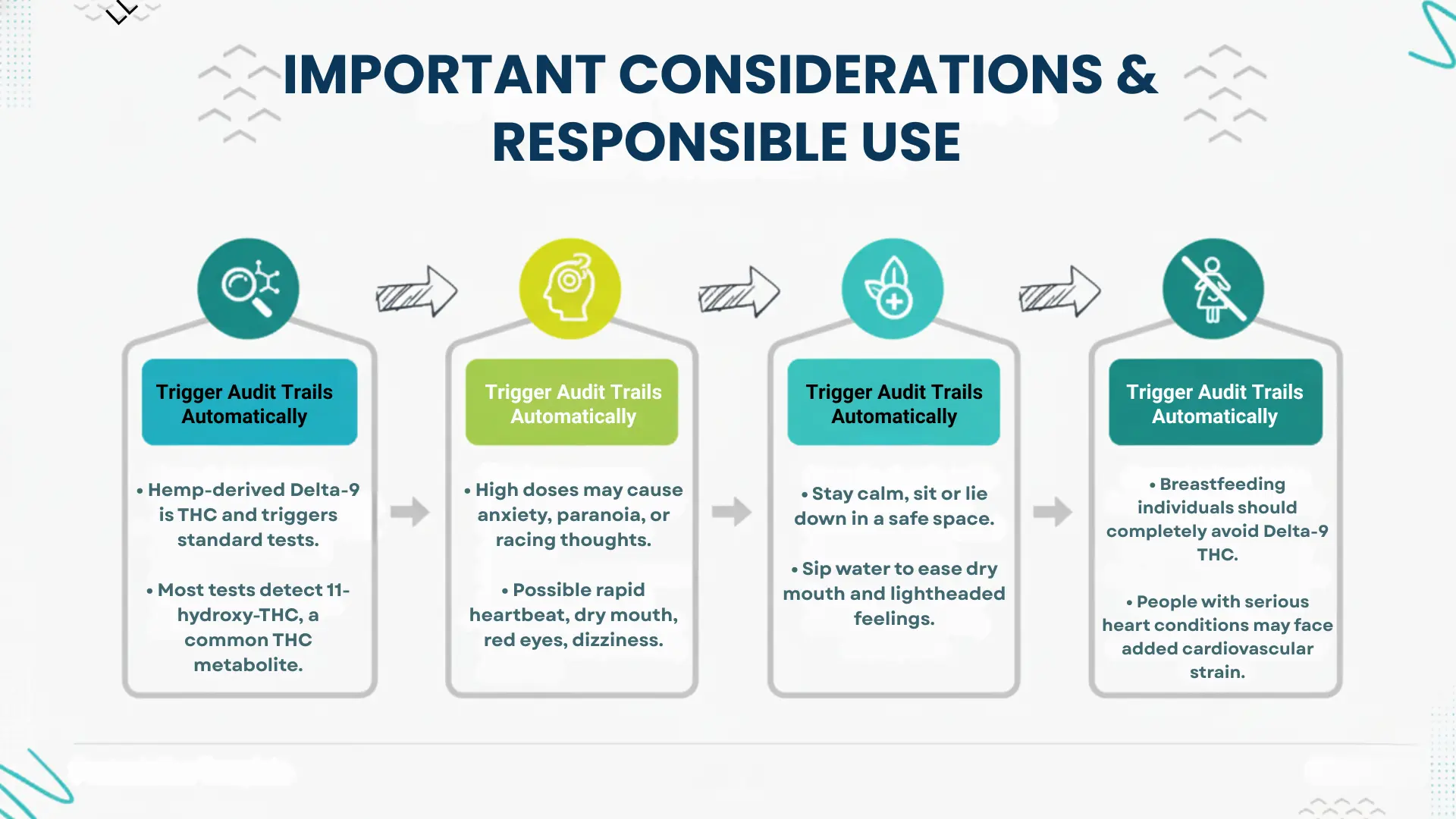
Make no mistake: hemp-derived Delta-9 is THC. It will trigger a positive result on a standard drug test. Most tests look for the 11-hydroxy-THC metabolite. Whether you ate a gummy from a dispensary or a hemp-derived chew, the result is the same. Consequently, if your job requires testing, total abstinence is the only safe route.
Potential Side Effects and How to Manage Them
While generally safe, overconsumption can lead to:
- Anxiety or paranoia.
- Rapid heart rate.
- Dry mouth and red eyes.
- Impaired motor skills.
In rare, chronic cases, cannabinoid hyperemesis syndrome (CHS) can occur, causing severe nausea. If you experience negative side effects, hydration, CBD, and rest are the best remedies.
Who Should Avoid Delta-9 THC Edibles?
- Pregnant or nursing women.
- Individuals with a history of heart conditions or severe psychiatric disorders.
- Those taking medications metabolized by the cytochrome P450 enzymes, as cannabinoid-drug interactions can alter the effectiveness of your meds.
Consulting a Healthcare Professional
If you are using cannabinoids for medical reasons—such as managing anorexia or nausea from chemotherapy (historically treated with synthetic THC like dronabinol or Marinol), or using Sativex—always consult a doctor. While medical cannabis and a medical card offer a structured path, many now self-medicate with commercial edibles. Therefore, professional guidance ensures you don’t disrupt your current treatment plan.
Conclusion: Embracing the Future of Delta-9 THC Edibles
The world of Delta-9 THC edibles is vast, exciting, and rapidly evolving. From the legal shifts of the Farm Bill to the molecular magic of 11-hydroxy-THC, there is a depth of science and strategy behind every gummy.
Recap of Key Benefits and Considerations
We have explored how hemp-derived innovation has democratized access to THC, the importance of third-party lab tests for safety, and the nuances of dosing. Whether you are seeking relief, creativity, or relaxation, the key lies in informed consumption.
Making Informed Choices in a Growing Market
As the market matures, quality will separate the best from the rest. For those in Washington DC and beyond, Highthere represents the pinnacle of this evolution—offering transparency, safety, and premium quality in a sea of options. Visit highthere.me to explore a curated selection of THC-rich products that prioritize your experience and safety.
Frequently Asked Questions (FAQs)
1. Are Delta-9 gummies legal in Washington DC?
Yes, Delta-9 gummies are legal in Washington DC. You can purchase them through I-71 compliant gifting shops or, if they are hemp-derived and contain less than 0.3% Delta-9 THC by dry weight, they comply with federal regulations. Always buy from a trusted source like Highthere to ensure compliance and safety.
2. Can I buy Delta-9 edibles online if I live in DC?
Absolutely. Because of the 2018 Farm Bill, hemp-derived Delta-9 products can be shipped via USPS to many locations, including DC. However, utilizing a local service like Highthere ensures faster access and verified local quality.
3. How long do Delta-9 edibles stay in your system?
While the “high” lasts 6-8 hours, the metabolites can remain in your body for much longer. For infrequent users, it may take 3-5 days to clear, but for daily consumers, THC metabolites can be detectable in a drug test for 30 days or more.
4. What is the difference between Live Rosin and standard Distillate edibles?
Standard edibles use THC distillate, which is pure THC lacking other plant compounds. Live Rosin edibles are made from fresh-frozen plants, preserving the terpenes and minor cannabinoids. This often results in a more robust flavor and a comprehensive entourage effect, providing a fuller, more “true-to-plant” experience.
Experience Premium Quality at Highthere
Are you ready to elevate your wellness routine with trusted Delta-9 THC edibles? At Highthere, we are committed to providing Washington DC with the highest quality, lab-tested hemp-derived products. Shop our curated collection today for safe, potent, and delicious options delivered right to your door.