
Mango Cannabinoids & Weed: Does Eating Mango Enhance Your High?
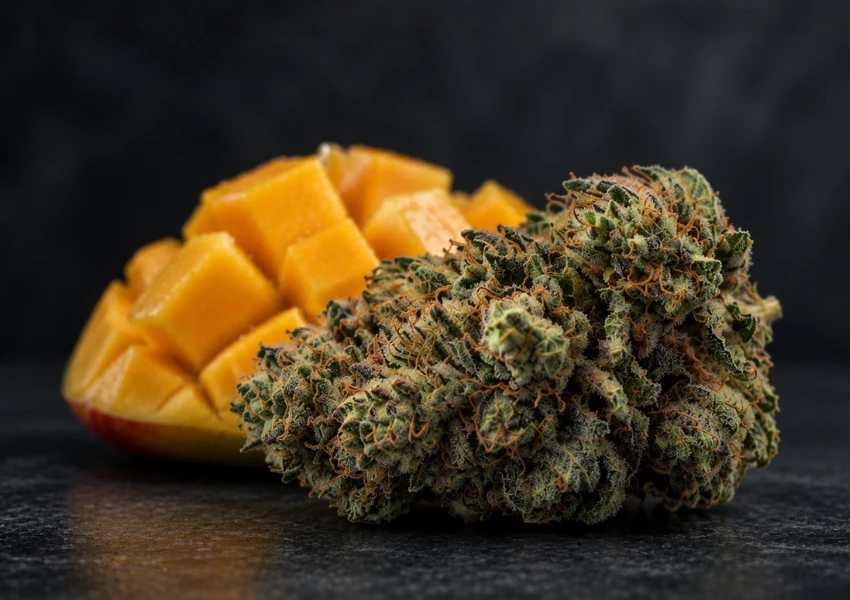
Mango Cannabinoids: Does Eating Mango Really Boost Your Weed High?
Understanding the science behind mango cannabinoids reveals whether eating fresh fruit can truly amplify your weed high. Specifically, cannabis folklore claims that eating ripe mangoes before smoking intensifies THC potency. Proponents also assert that fruit terpenes accelerate onset and extend physical sedation. In theory, this botanical concept connects volatile monoterpenes with cannabinoid receptors. Furthermore, beta-myrcene appears naturally in both tropical fruit pulp and resinous cannabis trichomes. Many popular cannabis blogs claim that myrcene reduces resistance across the human blood-brain barrier. Consequently, they argue that cannabinoids enter brain tissue more rapidly. However, analytical laboratory data reveals a very different physiological reality regarding mango cannabinoids.
In fact, fresh fruit contains only trace terpenes compared to cured cannabis flower. Therefore, eating a mango cannot turn low-potency weed into a heavy concentrate. In addition, dietary terpenes face extensive breakdown during human digestion. In contrast, inhaling cannabis flower delivers intact terpenes directly into pulmonary capillaries. Nevertheless, fresh fruit provides real hydration and natural micronutrients. Thus, eating fruit creates genuine physical comfort during a session. For consumers seeking true physical relaxation, exploring the High There DC dispensary menu provides lab-tested cultivars that grocery fruit cannot replicate.
The Botanical Science Behind Mango Cannabinoids and Weed
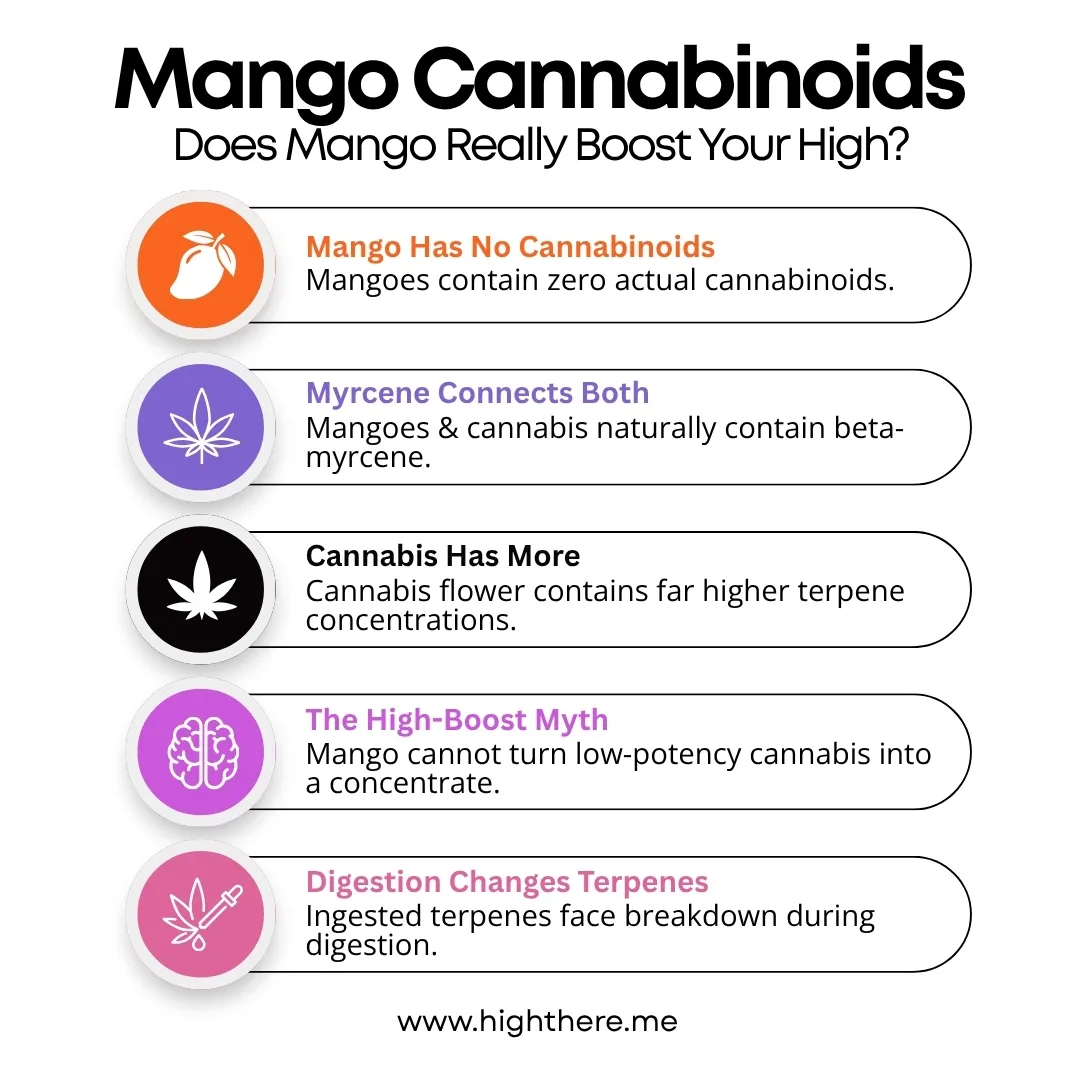
The term mango cannabinoids is a common misnomer among online searchers. Botanically, the mango tree (Mangifera Indica) belongs to the sumac family, Anacardiaceous. As a result, mangoes cannot synthesize true Phyto cannabinoids. In contrast, true Phyto cannabinoids remain unique to the Cannabis sativa L. plant. Glandular trichomes on cannabis flowers produce molecules like delta-9-THC, CBD, and CBG. Therefore, despite popular interest in mango cannabinoids, mango fruit contains zero actual cannabinoids.
Instead, the connection between these two plants rests entirely on aromatic terpenes. Plants synthesize terpenes as secondary metabolites to repel herbivores and resist environmental pathogens. Among these aromatic compounds, beta-myrcene is shared between cannabis and ripe mangoes. Because myrcene influences physical relaxation, folklore assumed mango cannabinoids would intensify cannabis intoxication. However, chemical mass dictates pharmacological outcome.
Phytochemical Profiles: Terpenes in Tropical Mango Cannabinoids
In cannabis flower, myrcene plays an active role in the entourage effect. Specifically, terpenes and cannabinoids work together to shape the subjective experience. Cultivars with high myrcene levels frequently produce deep muscle relaxation and couch-lock. Consequently, consumers hoped that dietary mango cannabinoids would trigger identical physical sedation.
However, plant composition varies dramatically across botanical species. While cannabis resin glands produce massive concentrations of monoterpenes, edible fruits produce much lower levels. In addition, the human body processes inhaled terpenes differently than ingested fruit nutrients. Therefore, evaluating mango cannabinoids and their actual physiological potential requires reviewing real laboratory data.
Gas Chromatography Analysis: Mango Cannabinoids vs. Cannabis Flower
To evaluate mango cannabinoids, analytical chemists examine volatile compounds using gas chromatography-mass spectrometry. These laboratory tests measure total volatile organic compounds in edible fruit tissue. Specifically, total volatiles in fresh mango mesocarp range from 18 to 123 milligrams per kilogram. Moreover, beta-myrcene is rarely the dominant volatile terpene in grocery store mangoes.
In fact, commercial varieties like Tommy Atkins, Kent, and Keitt are dominated by 3-carene and alpha-pinene. In these common fruits, myrcene represents less than 1% of total volatiles. Fragrant tropical cultivars like Indian Alphonso do contain higher myrcene ratios. Even so, the total milligram weight of myrcene remains tiny compared to cannabis resin.
| Botanical Source & Cultivar | Serving Portion | Beta-Myrcene Content | Dominant Terpene Profile |
|---|---|---|---|
| Commercial Mango (Tommy Atkins) | 1 cup sliced (165g) | 0.01 mg to 0.05 mg | 3-Carene, Alpha-Pinene, Limonene |
| Tropical Mango (Alphonso) | 1 cup sliced (165g) | 0.10 mg to 0.20 mg | Beta-Myrcene, Ocimene, Limonene |
| Craft Cannabis Flower (High Terpene) | 0.5g rolled joint | 5.00 mg to 10.00 mg | Beta-Myrcene, Caryophyllene, Linalool |
| Live Rosin Vaporizer Cartridge | Single inhalation (~5 mg oil) | 0.25 mg to 0.50 mg | Beta-Myrcene, Caryophyllene, Humulene |
The Myrcene Milligram Mismatch in Mango Cannabinoids
As the laboratory data shows, a massive numerical gap exists between fruit and flower. Specifically, a cup of fresh mango supplies roughly 0.1 to 0.2 milligrams of myrcene. In contrast, cured cannabis flower often contains 1.0% to 2.0% myrcene by dry weight. Consequently, a standard 0.5-gram joint supplies between 5.0 and 10.0 milligrams of pure myrcene.
Therefore, smoking a single joint delivers up to 50 times more myrcene than eating an entire mango. In addition, inhaled terpenes enter the bloodstream within seconds via pulmonary capillaries. Meanwhile, ingested fruit nutrients must survive harsh stomach acids and liver metabolism. Thus, browsing our comprehensive strain directory provides a far more reliable method to explore real terpenes.
Pharmacological Analysis: How Mango Cannabinoids and Terpenes Behave
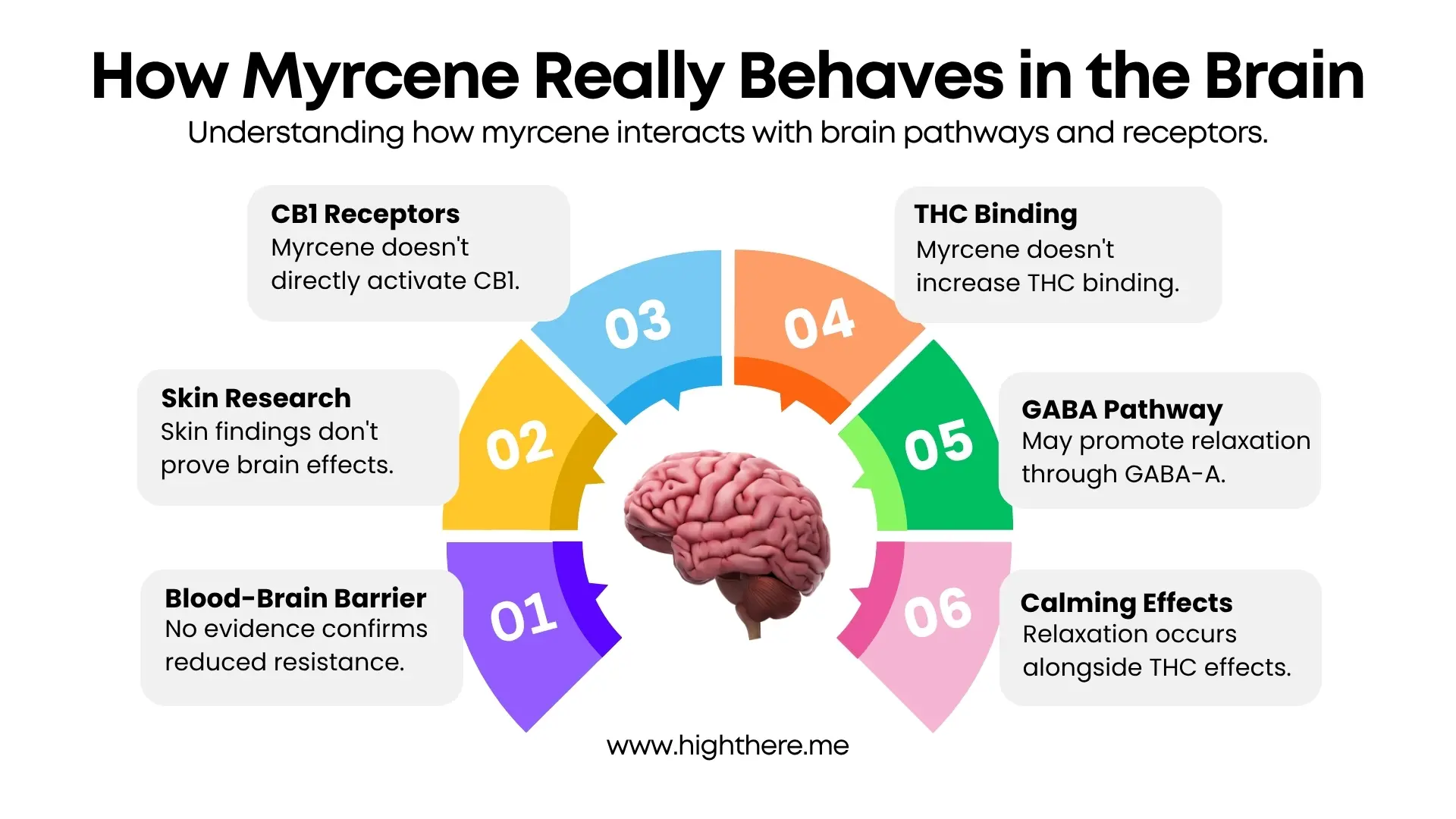
The primary scientific claim behind mango cannabinoids involves the human blood-brain barrier. Proponents suggest that dietary myrcene fluidizes endothelial cell membranes. In theory, this allows THC molecules to enter the brain faster and in higher volumes. However, this claim extrapolates from transdermal skin research rather than neurological studies.
Specifically, myrcene can enhance topical absorption through human skin. In pharmaceutical lotions, monoterpenes fluidize the outer lipid layers of dead skin cells. However, the blood-brain barrier features tight endothelial junctions regulated by specialized transport proteins. As a result, skin permeability findings do not apply to brain capillary tissues. To date, no human clinical trial confirms that mango cannabinoids lower blood-brain barrier resistance.
Autaptic Hippocampal Electrophysiology and CB1 Receptors
Furthermore, direct cellular research challenges the idea that myrcene alters cannabinoid receptor signalling. In a study published in Biochemical Pharmacology, scientists tested terpenes on mammalian autaptic hippocampal neurons. Specifically, researchers used whole-cell patch-clamp electrophysiology to evaluate CB1 cannabinoid receptors. They applied beta-myrcene at a ceiling physiological concentration of 1 micromolar ($1\ \mu\text{M}$).
Remarkably, myrcene produced no significant alteration in excitatory postsynaptic currents. In addition, the terpene caused no change in depolarization-induced suppression of excitation. This finding confirms that myrcene does not directly activate CB1 receptors. Similarly, myrcene does not act as a positive allosteric modulator of cannabinoid signalling. Therefore, myrcene cannot directly intensify THC binding in the brain.
GABA Receptor Modulation and Non-Cannabinoid Sedation
Nevertheless, consumers frequently associate myrcene-dominant cannabis with deep physical sedation. Interestingly, this calming sensation occurs through independent neurological pathways. In animal studies, high doses of myrcene produce measurable muscle relaxation and pain relief. However, these sedative outcomes stem from interactions with gamma-aminobutyric acid ($\text{GABA}_\text{A}$) receptors.
Because this functions as the central nervous system’s primary inhibitory receptor, myrcene promotes natural relaxation. Consequently, myrcene produces calming effects alongside THC, rather than by altering THC itself. Thus, the heavy couch-lock sensation comes from parallel neurological pathways working at the same time.
Beyond Mango Cannabinoids: Mangiferin and Hepatic Metabolism
While public discussions focus heavily on myrcene, mangoes contain another interesting botanical compound. Specifically, mango fruit, peel, and leaves contain high levels of the polyphenolic xanthone mangiferin. Research indexed by the National Centre for Advancing Translational Sciences reveals that mangiferin influences metabolic enzymes. In laboratory cell assays, mangiferin acts as an inhibitor of human cytochrome P450 enzymes.
In particular, mangiferin down-regulates the activity of CYP3A4 and CYP2C9 enzymes in vitro. This metabolic action is significant for cannabis consumers exploring mango cannabinoids. In the human liver, CYP2C9 and CYP3A4 serve as the primary pathways for metabolizing active cannabinoids. Therefore, compounds that modulate these enzymes could theoretically alter cannabinoid clearance.
First-Pass Metabolism and Cannabis Edibles
When you consume cannabis edibles, delta-9-THC passes through the gastrointestinal tract to the liver. Next, hepatic CYP2C9 enzymes convert THC into 11-hydroxy-THC, a potent psychoactive metabolite. Afterward, CYP3A4 enzymes metabolize active 11-hydroxy-THC into inactive THC-COOH for bodily excretion. Consequently, inhibiting these enzymes can prolong active cannabinoid levels.
Because mangiferin inhibits CYP3A4 and CYP2C9 in vitro, consuming concentrated mango polyphenols might slow edible clearance. However, fresh fruit pulp contains much lower mangiferin levels than concentrated peel extracts. Nevertheless, this enzymatic interaction offers a plausible biochemical mechanism for edibles that deserves further clinical study.
Nutritional Support: Fructose, Hydration, and Cottonmouth
Beyond complex pharmacology, fresh mango provides practical nutritional benefits during a smoke session. Fresh mango pulp consists of approximately 83% water by weight. Because inhaled cannabinoids bind to CB1 receptors in salivary glands, smoking often causes dry mouth. Therefore, chewing fresh, juicy fruit provides immediate oral hydration and soothing throat comfort.
In addition, fresh mango supplies natural dietary fructose and simple carbohydrates. Ingesting natural fruit sugars supports healthy blood glucose levels. Consequently, this natural sweetness helps prevent the dizziness or mild lightheadedness that occasionally accompanies high-THC flower. Ultimately, eating delicious fruit enhances overall session enjoyment through natural sensory comfort.
The Practical Optimization Protocol: Mango Cannabinoids and Weed
For consumers who want to test the mango technique, proper nutrient timing is essential. Chewing and digesting solid food requires coordinated gastrointestinal processing. Specifically, solid fruit pulp must enter the stomach, pass through the pyloric sphincter, and reach the small intestine. Only then can dietary nutrients undergo absorption into portal circulation.
Therefore, eating a mango while smoking produces zero synergistic absorption. Inhaled cannabinoids reach peak arterial levels within 3 to 10 minutes of inhalation. Meanwhile, digested fruit nutrients take over an hour to enter the bloodstream. Consequently, proper scheduling is critical to align metabolic timelines.
Timing the Digestive Window
To optimize enteric digestion, consume fresh ripe mango approximately 45 to 60 minutes before inhaling cannabis. This waiting period allows gastric enzymes to break down the fruit pulp completely. Furthermore, it gives intestinal mucosal tissue time to absorb circulating micronutrients and polyphenols.
However, individual metabolic rates can vary based on daily diet. For instance, consumers who have recently eaten heavy, high-fat meals experience delayed stomach emptying. In that situation, extend the waiting window to 75 or 90 minutes. Chew the fruit thoroughly to support rapid gastrointestinal absorption.
Selecting Ripe Fruit: Why Juices and Dehydrated Mango Fail
Fruit quality also dictates volatile terpene preservation. Volatile monoterpenes evaporate rapidly when exposed to atmospheric heat or industrial processing. For example, commercial dehydrated mango slices undergo extended drying cycles in warm ovens. Consequently, convective heat drives off delicate beta-myrcene, leaving behind concentrated sugars.
Similarly, store-bought mango juices and bottled nectars undergo high-temperature pasteurization. This thermal treatment destroys volatile organic compounds to ensure prolonged shelf stability. Therefore, commercial fruit juices supply virtually zero active monoterpenes. Instead, consumers should always choose fresh, highly fragrant whole fruit or cold-blended raw smoothies.
Harm Reduction and Respiratory Safety
While enjoying fresh produce is entirely healthy, consumers must avoid dangerous online hacks. In particular, some internet forums suggest drying mango peels to roll joints. This practice carries severe respiratory hazards. Combusting fibrous fruit peel produces acrolein, carbon monoxide, and toxic particulate matter.
Furthermore, mango skins contain urushiol, the oily organic allergen found in poison ivy and sumac. Inhaling combusted urushiol can trigger acute chemical pneumonitis and severe bronchial inflammation. Therefore, never attempt to smoke dried mango peel or fruit matter. Always consume fruit orally, and smoke only clean, lab-tested cannabis flower.
High-Myrcene Strains: A Superior Alternative to Mango Cannabinoids
Because grocery produce provides negligible terpene concentrations, smart consumers turn to selective plant genetics. When evaluating flower potency, reading about high-THC weed strains and potency explains how secondary terpenes steer effects. Selective breeding allows cultivators to produce cannabis varieties naturally rich in myrcene.
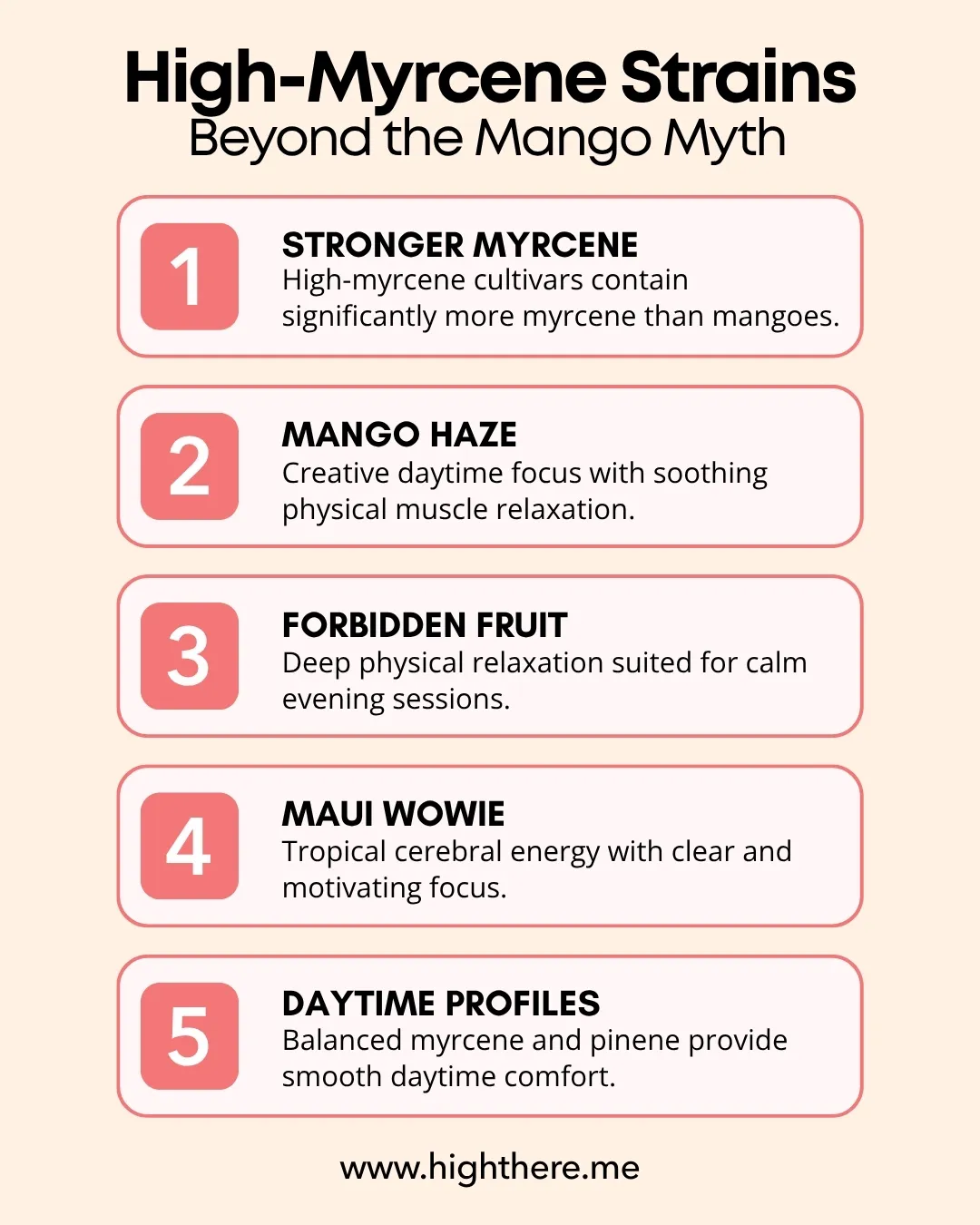
In fact, high-myrcene cultivars supply 25 to 50 times more active myrcene per gram than fresh fruit. In addition, inhaling cured flower delivers these terpenes directly to brain receptors in minutes. Therefore, purchasing certified craft cultivars represents a far superior alternative to chasing hypothetical mango cannabinoids.
| Cultivar Name | Genetic Lineage | Dominant Terpene Architecture | Experiential & Somatic Profile |
|---|---|---|---|
| Mango Haze strain | Northern Lights #5 x Skunk x Haze | Beta-Myrcene, Alpha-Pinene, Caryophyllene | Upbeat daytime focus with soothing muscle ease |
| Forbidden Fruit cultivar | Cherry Pie x Tangie | Beta-Myrcene, D-Limonene, Caryophyllene | Deep physical couch-lock and evening sedation |
| Hawaii Maui Wowie | Hawaiian Landrace Heritage | Beta-Myrcene, Alpha-Pinene, Limonene | Tropical cerebral buzz with clear mental energy |
| Uncle Snoop | Wedding Cake x Sunset Sherbet | Beta-Caryophyllene, Myrcene, Limonene | Heavy somatic relief, body calm, and restorative rest |
Daytime and Creative High-Myrcene Cultivars
Notably, high myrcene does not always cause heavy physical tiredness. When balanced by stimulating monoterpenes like pinene, myrcene provides smooth daytime comfort. For example, the legendary sativa landrace Hawaii Maui Wowie blends rich myrcene with crisp alpha-pinene. Consequently, it delivers bright tropical sweetness alongside motivating mental focus.
Similarly, Mango Haze pairs rich herbal myrcene with uplifting sativa genetics. As a result, consumers enjoy a burst of creative euphoria while releasing lingering neck and shoulder tension. Therefore, this tropical hybrid suits afternoon socializing or productive art sessions perfectly.
Evening Sedation: Potent Myrcene for Couch-Lock
In contrast, consumers seeking heavy evening sedation should choose Indica-dominant profiles. Forbidden Fruit features dense purple flowers saturated with myrcene and caryophyllene. Within minutes of inhalation, warm physical relaxation spreads across the limbs. Consequently, racing thoughts quiet down, preparing the body for deep sleep.
Likewise, the potent hybrid Uncle Snoop combines heavy cannabinoids with rich myrcene profiles. This potent genetic cross eases muscular stiffness and relieves evening stress effectively. Thus, selecting genuine high-myrcene flower delivers the genuine couch-lock results that grocery produce cannot match.
Washington, DC Cannabis Fulfilment: Sourcing High-Myrcene Strains
Accessing premium cannabis in the District requires understanding local municipal regulations. Under Initiative 71, adults aged 21 and older may legally possess up to two ounces of cannabis. Furthermore, adults can legally gift up to one ounce to another adult 21 or older. Because federal budget riders restrict conventional recreational sales, DC developed a regulated gifting ecosystem.
Additionally, the District’s Alcoholic Beverage and Cannabis Administration (ABCA) oversees local cannabis compliance. Recent enforcement has closed dozens of unregulated, unlicensed pop-up shops across the city. Therefore, consumers exploring mango cannabinoids and terpene-rich flower should always purchase from established services that verify recipient age and ensure clean product standards.
Initiative 71 Compliance and District Regulations
High There operates in strict compliance with all District of Columbia Initiative 71 provisions. Specifically, every order requires recipient age verification using a valid government-issued photo ID. Couriers never deliver to federal properties, such as the National Mall or military grounds.
Instead, couriers deliver safely to verified private residential addresses across all District quadrants. Customers enjoy peace of mind knowing all products undergo quality screening. Moreover, scheduled curbside pickup is available at our central facility at 1309 5th St NE, Floor 2, Washington, DC 20002.
Same-Day Residential Delivery Across Northwest DC Neighborhoods
High There provides discreet same-day cannabis delivery to 48 distinct DC neighbourhoods. For instance, residents in Dupont Circle receive fast doorstep fulfilment to historic brownstones and flats. Couriers also navigate Adams Morgan, serving residents along the vibrant 18th Street NW corridor.
Furthermore, our couriers serve historic Georgetown, overcoming neighbourhood parking challenges to deliver directly to your residence. Meanwhile, busy professionals along the 14th Street corridor in Logan Circle can schedule prompt evening deliveries. Ultimately, our reliable logistics network makes accessing lab-tested flower seamless across the District.
How to Order Lab-Tested Cannabis Through High There
Ordering cannabis delivery in Washington, DC is simple, safe, and efficient. First, visit our online dispensary to explore our live cannabis menu of craft flower, cartridges, and edibles. Next, filter selections by desired terpene profile to pinpoint high-myrcene strains quickly.
Then, upload your valid 21+ government photo identification to verify your age securely. Afterward, confirm your private residential delivery address in Dupont Circle, Georgetown, or Logan Circle. Finally, our professional dispatch team coordinates rapid fulfilment, keeping you updated until your package arrives safely. You can also call or text our dedicated support desk directly at (202) 819-7828.
Frequently Asked Questions (FAQs)
Q : Does mango make you higher?
A : Eating a mango does not significantly increase the psychoactive potency of inhaled cannabis. Fresh commercial fruit contains only 0.01 to 0.20 milligrams of myrcene, whereas a 0.5-gram joint supplies 5 to 10 milligrams. Furthermore, patch-clamp studies confirm myrcene does not directly activate CB1 receptors.
Q : Do you eat mango before or after getting high?
A : Eat fresh mango roughly 45 to 60 minutes before smoking to allow sufficient time for digestion. Inhaled cannabinoids peak within minutes, long before digested fruit nutrients enter circulation. However, eating mango after smoking provides excellent hydration against cottonmouth.
Q : How much myrcene is in one mango?
A : An average fresh grocery mango contains roughly 0.01 mg to 0.20 mg of beta-myrcene. Common supermarket varieties like Tommy Atkins are dominated by 3-carene rather than myrcene. In contrast, cured cannabis flower tests at 10 to 20 mg of myrcene per gram.
Q : Can you smoke dried mango peel?
A : No, you should never attempt to smoke dried mango peel or fruit scraps. Combusting fruit matter releases harsh acrolein, carbon monoxide, and particulate toxins into your lungs. Furthermore, mango skins contain urushiol, which can trigger severe respiratory inflammation.
Q : Do mangoes affect cannabis edibles differently than smoking?
A : Yes, mangoes can theoretically interact with cannabis edibles in the liver. Mangoes contain mangiferin, a polyphenol that inhibits CYP3A4 and CYP2C9 enzymes in laboratory tests. Because these enzymes metabolize ingested THC, inhibiting them could modestly prolong edible effects.
Final Verdict on Mango Cannabinoids and Craft Cannabis
In conclusion, the myth of mango cannabinoids highlights a passionate consumer interest in natural terpene science. However, analytical chromatography confirms that fresh fruit cannot supply the massive terpene levels found in cured cannabis. Moreover, electrophysiology studies prove that myrcene does not directly enhance CB1 receptor activation. Therefore, relying on mango cannabinoids will not magically transform your cannabis potency.
Nonetheless, fresh mango remains one of the healthiest snacks you can enjoy during a session. Its natural fructose supports stable blood sugar, while its high water content relieves cottonmouth. However, when you desire deep body relaxation and genuine couch-lock, choose craft cannabis flower bred for elevated myrcene content. Browse High There today to explore lab-tested strains and enjoy fast same-day delivery across Washington, DC.